Tattoo website builder: what to look for before you choose
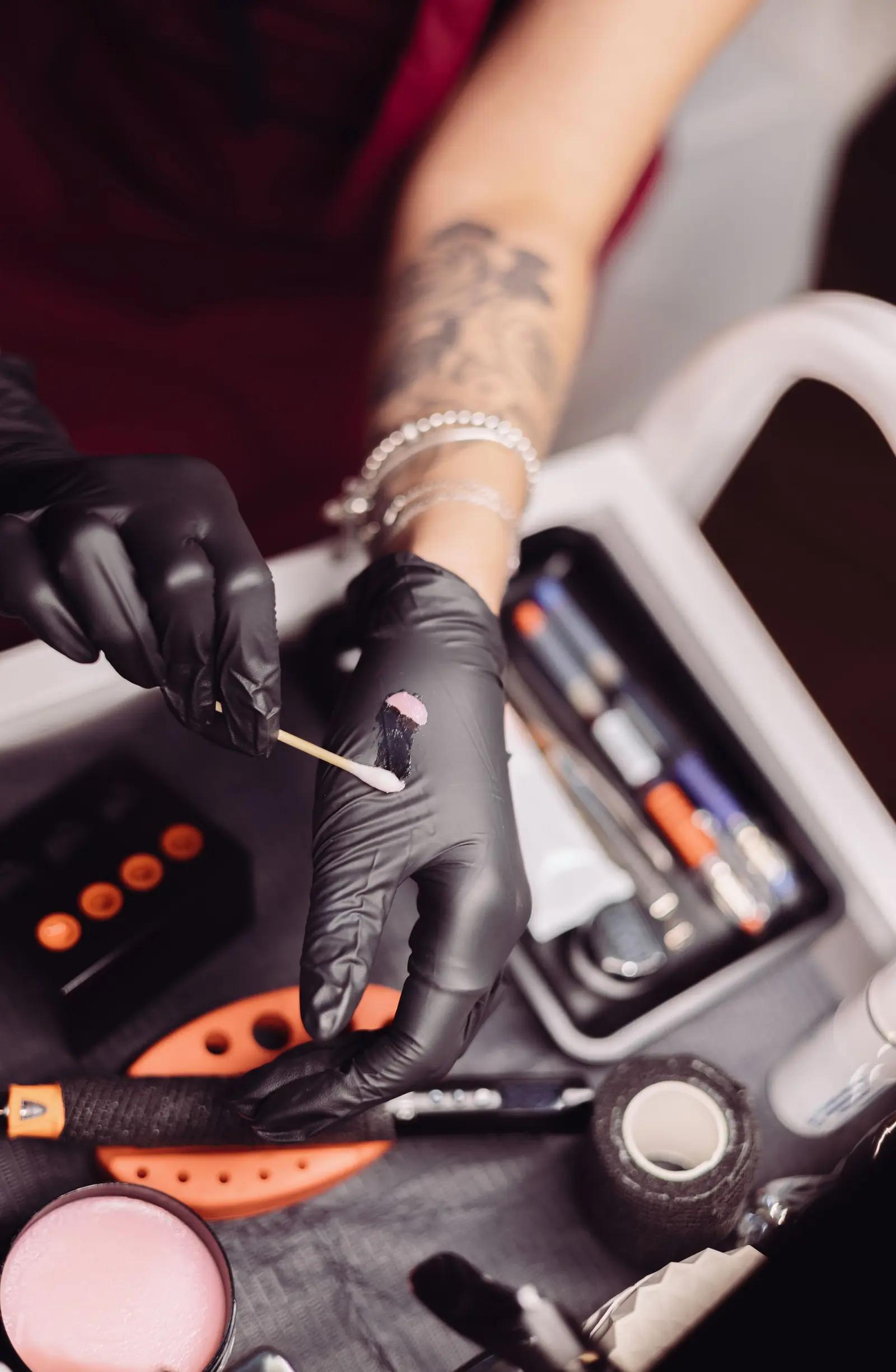
A tattoo website builder is a website tool made for tattoo shops and artists. Instead of generic blocks, it should come with the parts a tattoo business uses every day: portfolios per artist and style, a booking form that asks the right questions, flash, a webshop and your own domain. This guide walks through what to check before you choose one.
Why a general website builder often falls short
General website builders are made for every kind of business: restaurants, consultants, online stores. They can produce a good-looking site, but a tattoo shop needs things they don't offer out of the box. You end up adding a booking plugin, a separate payment tool, a form builder for reference images and a shop extension. Each one has its own login, its own costs and its own way of breaking.
A builder made for tattoo work starts from the questions your clients ask: who does this style, how do I book, what does it cost, where are you and how do I look after my tattoo? That is the bar to measure against. If you want the full picture of which pages a shop site needs, read our guide on how to make a website for your tattoo shop.
1. Portfolios per artist and per style
Clients choose an artist based on work. The builder should let every artist have their own page and portfolio, and let visitors filter by style: fine line, blackwork, traditional, realism and so on. Check how easy it is to add new work from your phone, and whether images load fast on mobile data.
2. Booking requests that arrive complete
A good booking form saves hours of DMs. It should ask for the idea, placement, size, colour or black and grey, reference images and the preferred artist, and route the request to the right person. Look for a builder where the form is part of the site, not an external widget. On OnlineTattoo.art, booking request forms are included in every plan.
3. Deposits
Deposits reduce no-shows and protect the time you spend drawing. Ask how deposits work: can you send a payment link after accepting a request, where does the money go, and is there a commission? Some tools route payments through their own account and take a cut. At OnlineTattoo.art, online deposits are in development as the Bookings add-on; payments will go straight to your own Mollie or Stripe account, without commission.
4. Flash
If you draw flash, you want a page per sheet or per design, with a price and a clear note on whether a design is one-off or repeatable. Flash pages with prices are available on OnlineTattoo.art today; claiming a design with a deposit is coming as an add-on. More on that on the page about how to sell tattoo flash online.
5. A webshop for aftercare, prints and merch
Many shops sell aftercare balm, prints of flash, shirts and gift items. A built-in webshop keeps that next to your portfolio, with payment going to your own account. Check which payment methods are supported (iDEAL, card, Bancontact, Apple Pay, PayPal) and whether the builder takes a percentage of sales.
6. Your own domain and a professional email address
yourshop.com looks more trustworthy than a link to a platform profile, and it is yours if you ever switch providers. Check whether the domain is included, who handles DNS and SSL, and whether redirects are set up when you move from an old site. On OnlineTattoo.art your own domain is free for the first year; a mailbox on your domain is coming as an add-on.
7. Local search: being found on Google
People search for "tattoo shop" plus their city, or a style plus their city. The builder should let you show your address, opening hours and contact details as real text, use clean page titles and descriptions, and create a sitemap automatically. You should be able to write a short description of your shop and styles in your own words.
8. Who builds the first version?
Building a site takes time you would rather spend tattooing. Some providers only give you a blank template. Others build the first version for you. With OnlineTattoo.art you can request a free website preview: we build a private preview from your Instagram or current site, and you only choose a plan if you want to go live.
9. Clear pricing without surprises
Compare the full monthly cost, not just the headline price. Add the booking plugin, the payment tool, the domain, the email and the webshop extension you would need elsewhere. Check whether you can cancel monthly, whether prices include VAT, and whether add-ons are optional. Our pricing page lists both plans and the add-ons, with prices including VAT.
Moving from an existing website
If you already have a site, ask how a move works. Who copies your pages and portfolio? Are redirects set up from your old addresses, so links on Google, Instagram and business cards keep working? Can you keep your current domain? A good provider handles this for you and tells you upfront what changes for your clients. On OnlineTattoo.art we bring over your pages and work, connect your domain and set up redirects from your old URLs.
A quick checklist
- Portfolio per artist, filterable by style
- Booking form with reference images and placement questions
- Deposits paid into your own account, without commission
- Flash pages with prices and one-off or repeatable designs
- Webshop for aftercare, prints and merch
- Own domain with SSL, and redirects from your old site
- Address, opening hours and contact details as text for local search
- Help with building or moving the site
- Transparent pricing, monthly cancellable
How to decide
Make a list of the questions you answer most often in DMs, then open each builder's demo or preview and see whether those questions are answered on the site without you. The builder that removes the most DMs is usually the right one. If you want to see what that looks like with your own work, take a look at how the OnlineTattoo.art website builder works.
Photo: Oleksandra Biliak / Pexels