Blackwork tattoos: styles, placement, healing and finding an artist
A blackwork tattoo uses only black ink, usually in bold shapes, solid areas, patterns or dense linework. It ranges from ornamental mandalas and geometric patterns to illustrative pieces and full blackout sleeves. Because there is no colour to carry the design, blackwork depends on strong composition and contrast. This guide explains the main types, what to think about before you book and how to find the right artist.
What counts as blackwork
Blackwork is a broad term. What the pieces share is that they are made only with black ink and rely on the contrast between black and skin. Within that, artists work in very different ways.
Ornamental and geometric
Patterns built from repeating shapes, lines and dots: mandalas, lace-like ornaments, sacred geometry, symmetrical designs that follow the shape of the body. Precision and symmetry matter a lot here.
Dotwork
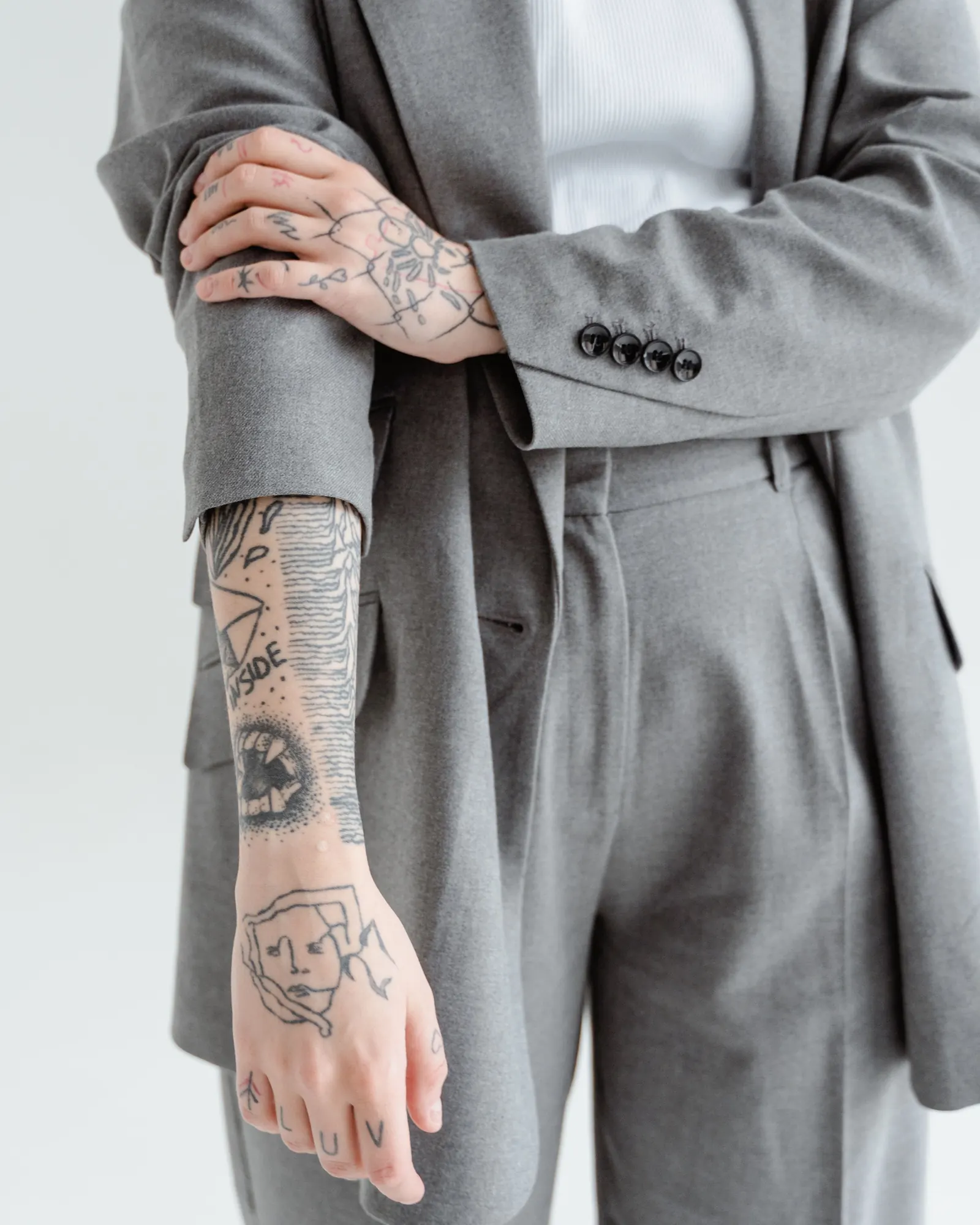
Shading built up from many small dots instead of smooth gradients. Dotwork is often combined with ornamental designs, and the texture gives a soft, grainy look.
Illustrative blackwork
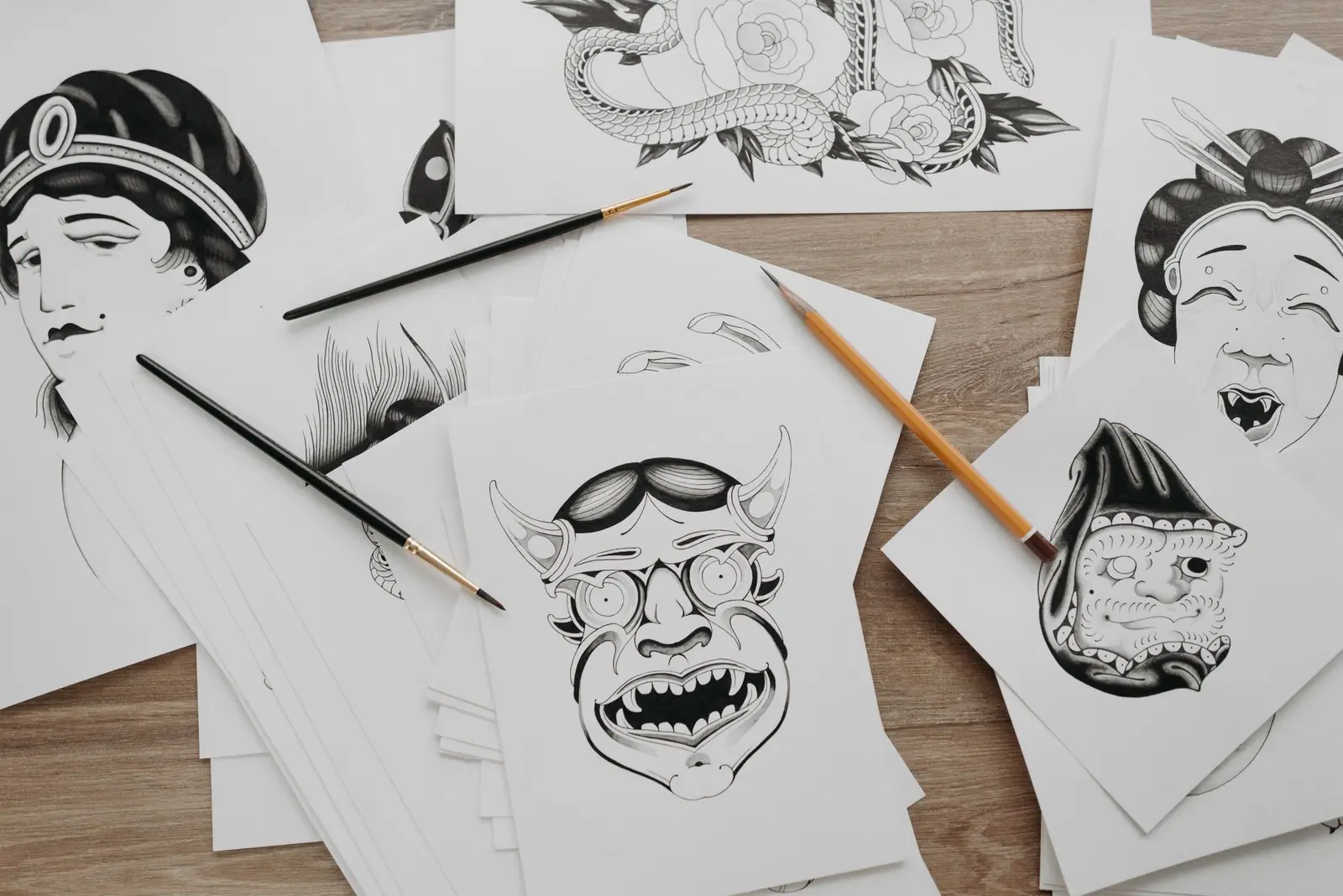
Images drawn like etchings, woodcuts or ink illustrations: animals, plants, skulls, figures. Lines and hatching create depth, without colour.
Bold graphic and tribal-inspired work
Large, solid black shapes that follow the muscles and lines of the body. Many artists draw on historic and cultural traditions here; it's worth discussing the background of a motif with your artist.
Blackout
Large areas, sometimes a whole arm, filled completely with black. Blackout is sometimes used to cover old tattoos, and sometimes as a base for white or negative-space designs on top later.
Why people choose blackwork
- Strong contrast that reads well from a distance
- A graphic look that suits large areas and flowing compositions
- Many artists say black holds its contrast well over the years
- It can work well for cover-ups, depending on the old tattoo
Placement
Blackwork works almost anywhere, but large patterns and graphic shapes come into their own on areas where they can follow the body: forearms, upper arms, shoulders, the back, thighs and calves. Ornamental work often follows the line of the spine, the sternum or the shoulder.
Think about the bigger picture. A strong blackwork piece can define the look of a whole arm or back, which affects what you can add later. If you plan more tattoos in that area, discuss the overall plan with your artist.
Healing large black areas
Solid black areas are worked intensively, so they can feel tender and swollen for longer than a small line piece. Large blackout sessions are often split into several sessions. Healing takes time, and the area needs careful aftercare. Read our general tattoo aftercare guide, and above all follow the instructions your own artist gives you.
Blackwork and cover-ups
Because black covers well, blackwork is often considered for cover-ups. Whether it works depends on how dark, large and old the existing tattoo is. Some old tattoos can be covered directly; others need to be lightened first. An artist experienced in cover-ups will tell you honestly what's possible. Bring clear photos of the old tattoo to the consultation.
Planning a large blackwork project
Big blackwork pieces, such as sleeves, back pieces or full blackout, are projects rather than single appointments. Before you start:
- Discuss the full design and the order of sessions with your artist
- Ask how much healing time they want between sessions
- Agree how the price works: per session, per hour or for the whole project
- Plan sessions around holidays, sport and work, because large fresh areas need rest
Because blackwork relies on contrast between black and skin, people with every skin tone choose it. Ask artists to show healed work on skin tones similar to yours, so you can see how their black areas and linework settle. Take photos between sessions too: they help you and your artist see how each part has healed before the next one starts.
Choosing a blackwork artist
Look for an artist who specialises in the type of blackwork you want. An ornamental artist and an illustrative artist work very differently. In their portfolio, look for:
- Solid black areas that look even, without patchy spots
- Clean, symmetrical patterns where symmetry is intended
- Dotwork with smooth transitions
- Healed photos of large pieces, not just fresh ones
Our tattoo shop directory helps you find studios by country and city, with the styles they work in. Make a shortlist and go through the artists' portfolios.
Blackwork versus fine line
Both often use only black ink, but they are almost opposites. Fine line uses thin, delicate lines and lots of empty skin; blackwork uses bold shapes and dense areas. Some artists combine both, with fine detail inside a strong black frame. If you're unsure which suits you, compare pieces side by side; our guide on fine line tattoos shows the other end of the spectrum.
Booking a blackwork piece
- Collect references and note what you like: the pattern, the density of black, the texture
- Think about size and how the piece fits the area, and what might come next to it
- For large pieces, ask how many sessions the artist expects and how the price and deposit work
- Send a complete request with placement, size and photos of the area
Some blackwork artists release designs as flash, especially ornamental pieces and smaller illustrative designs. Others only do custom work.
For blackwork artists
Blackwork is hard to photograph well: solid black can lose detail and shine reflects strongly. Shoot in soft, even light and show healed results. A clear portfolio sorted by style helps clients find your work. With the OnlineTattoo.art tattoo website builder every artist has a portfolio by style next to a booking form with reference images. If you draw ornamental or illustrative flash, a flash page with prices lets clients choose a design directly.
Photo: Jordan Besson / Pexels