Traditional tattoos: bold lines, classic motifs and why they last
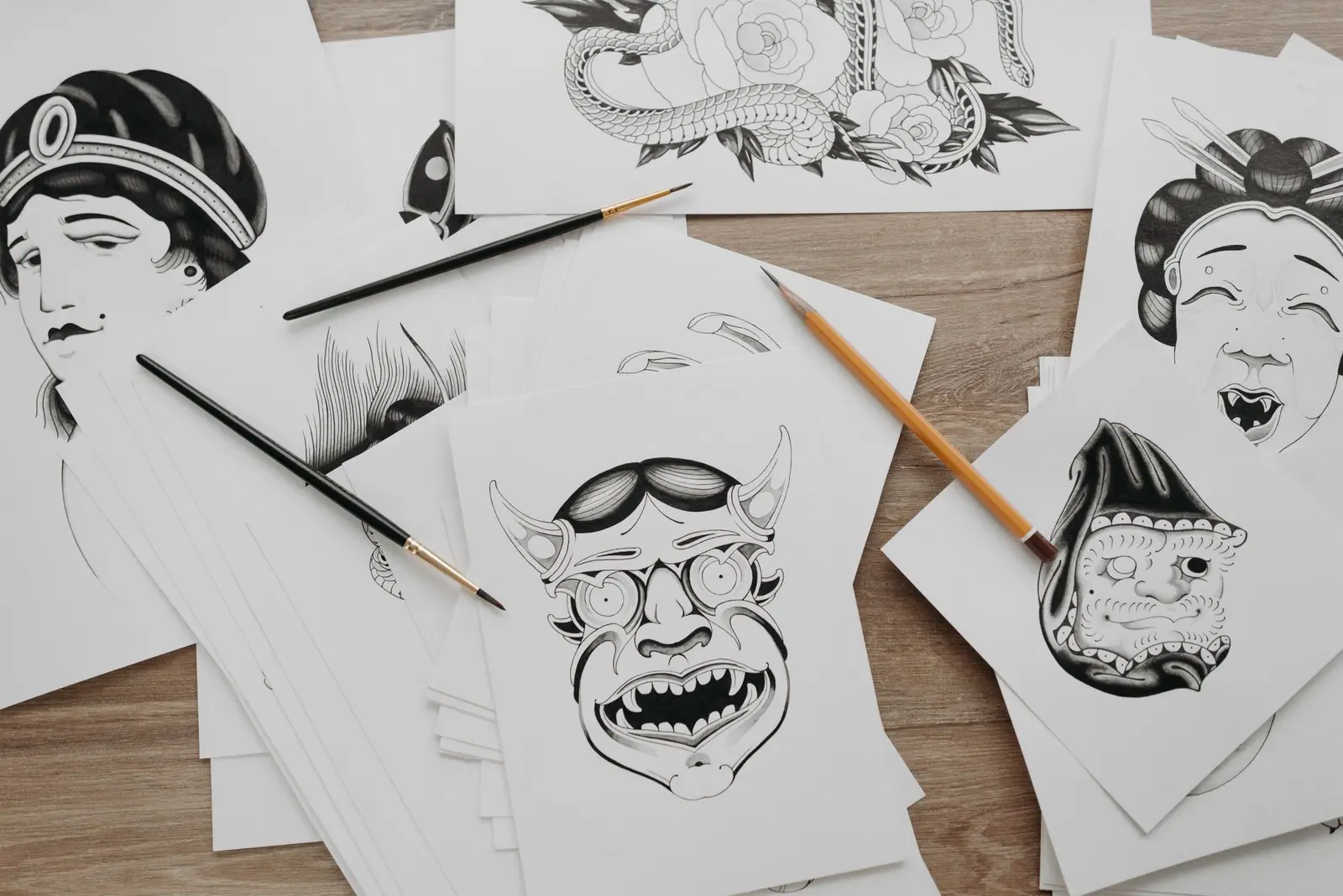
A traditional tattoo, often called American traditional or old school, is built from bold black outlines, a limited colour palette and solid fills. The motifs are classic: swallows, roses, daggers, panthers, eagles, ships, hearts and banners. It's one of the oldest styles in Western tattooing and still one of the most popular, because it's readable from across a room and tends to age well. This guide explains what defines it and how to choose an artist.
What defines traditional tattooing
Traditional is recognisable at a glance. The typical ingredients:
- Bold outlines: thick, confident black lines that hold the design together
- A limited palette: black, red, green and yellow are the classics, sometimes with blue or brown
- Solid colour and black shading: colour is packed in evenly; shading is simple and strong
- Simple, readable shapes: a design you can recognise from a distance
- Classic motifs: swallows, roses, daggers, panther heads, eagles, anchors, ships, skulls, hearts with banners and lettering
The style has deep roots in the flash sheets that hung on shop walls, where clients picked a design and got it the same day.
Why traditional ages well
There's a well-known saying among tattooers: "bold will hold". All tattoos soften over the years as ink settles. With thick outlines, solid colour and plenty of space between elements, a traditional design stays readable even when that happens. Very fine details and subtle gradients are more likely to blur together over time.
That doesn't mean traditional tattoos never change. Sun, placement and aftercare play a role for every style. But the design choices of traditional are made with longevity in mind.
Traditional versus neo-traditional
Neo-traditional builds on the same foundation, with bold outlines and readable designs, but adds more:
- A wider colour palette, including softer tones
- More detail, depth and variation in line weight
- More illustrative subjects and ornamental elements
If you love the strength of traditional but want something richer, neo-traditional may suit you. Look at portfolios of both and see what you're drawn to.
Flash and traditional
Traditional and flash belong together. Many traditional artists draw sheets of designs and release them as flash, with a fixed price per design. That makes it easy for clients to pick something they love and book quickly. For background on flash itself, read what tattoo flash is and how to sell it online.
If you're an artist releasing traditional sheets, our guide on planning a flash drop walks through preparing, announcing and handling claims.
On a traditional artist's flash you'll often see the same classic motif drawn in several versions: a rose with a dagger, a rose with a banner, a rose with a skull. Those variations are part of the tradition.
Placement
Traditional designs are often made to fit specific areas: a swallow on the chest, a dagger on the forearm, a panther on the upper arm. Because they're self-contained, they also work well as part of a collection of separate pieces, sometimes called a patchwork sleeve. Discuss with your artist how a new piece fits with what you already have and what you might add later.
Choosing a traditional artist
Traditional looks simple, which is exactly why weak work shows. In a portfolio, look for:
- Clean, confident outlines without wobbles
- Solid, even colour without patchy spots
- Balanced designs with enough space between elements
- Healed photos, ideally of pieces that are a few years old
Our tattoo shop directory lists studios by country and city, with the styles they work in. Shortlist a few artists who clearly specialise in traditional, then compare their portfolios.
Where traditional comes from
Traditional tattooing grew out of the street shops of the late nineteenth and twentieth centuries, especially in port cities, where sailors and soldiers were among the regular clients. That explains many of the classic motifs: ships, anchors, swallows, nautical stars, daggers and pin-ups. Shops displayed sheets of flash on the walls, and the designs were made to be tattooed quickly and to stay readable. Many of those motifs are still redrawn today, each artist adding their own hand.
Colour in traditional work
The limited palette of traditional is not just tradition; it also helps the design stay clear. Strong colours next to solid black create contrast that reads well at a distance. Very light colours and subtle blends are used less, because they can soften more over the years. If you have a darker skin tone, ask artists to show healed colour work on similar skin, and ask which colours they recommend; a good traditional artist will adapt the palette so the design keeps its contrast.
Booking a traditional tattoo
- Browse the artist's flash first: there might already be a design you love
- For custom work, describe the motif and placement and add references
- Ask about size: traditional designs need enough room for bold lines
- Check the deposit rules and how flash is priced
Many traditional artists welcome requests for classic motifs with a personal twist: a name in a banner, a specific flower or an animal that means something to you.
For traditional artists
Clients looking for traditional want to see two things: your flash and your healed work. A tattoo website can show both side by side. With the OnlineTattoo.art tattoo website builder you get a portfolio sorted by style and flash pages with prices, next to a booking form with reference images for custom requests. Claiming flash with a deposit is in development as the Flash add-on.
Quick reference: traditional at a glance
- Bold black outlines
- Limited palette: black, red, green, yellow
- Solid fills, simple shading
- Classic motifs from flash sheets
- Designed to stay readable for years
Photo: Pavel Danilyuk / Pexels