Your first tattoo: what to expect, from idea to healed

Your first tattoo is exciting and a little nerve-racking, mostly because you don't know what to expect. The good news: the process is simple once you've seen it laid out. This guide walks through the whole journey, from choosing an idea and an artist to the session itself and the first weeks of healing. It's general information; your artist's advice always comes first, and if you have a medical condition, check with your doctor.
Step 1: start with the idea, then find the style
Most first tattoos start with an image or a meaning. Collect pictures of tattoos you like, ideally healed ones, and look for what they have in common. Thin lines or bold outlines? Colour or black and grey? Small and delicate, or bigger and graphic? That tells you the style you're looking for, and that is how you'll find the right artist.
Take your time. A design you've liked for months is usually a safer choice than something you saw yesterday. If you're unsure about a meaningful design, live with the reference image on your phone's lock screen for a few weeks.
Step 2: think about size and placement
Size and placement affect how the tattoo looks, how it ages and how much the session hurts. A few points to consider:
- Visibility: do you want to see it yourself every day, or show it only when you choose?
- Work and daily life: some people prefer a spot they can cover easily
- Detail needs space: very small designs with lots of detail can blur over the years; your artist may suggest making it a bit bigger
- Pain: areas over bone or with thin skin usually feel more intense than fleshy areas such as the outer arm or thigh
Many people choose the forearm, upper arm, shoulder or calf for a first tattoo: easy to care for and relatively comfortable.
Step 3: choose an artist, not just a shop
Look for an artist who specialises in the style you want and shows healed work in their portfolio. Our checklist on how to choose a tattoo shop goes through this step by step. To find studios near you, browse our tattoo shop directory by country and city, for example tattoo shops in the Netherlands or tattoo shops in the United Kingdom.
Step 4: flash or custom?
- Flash is a design the artist drew in advance, usually with a fixed price. It's a great first tattoo: you see exactly what you'll get, and booking is often quicker.
- Custom is a design drawn for you. You share your idea and references; the artist designs it. This takes more time and usually needs a consultation and a deposit.
Step 5: book and pay a deposit
Send a complete request: your idea, placement, approximate size in centimetres, colour or black and grey, a few reference images and your availability. For custom work, most studios ask for a deposit to secure the appointment; it's usually deducted from the final price. Read the rules before you pay: what happens if you need to reschedule?
Budget: what to expect
Prices differ between artists and depend on size, detail, placement and the artist's experience. Many studios have a minimum price, even for very small tattoos, because setting up a clean workstation takes time and materials. Ask for an estimate for your specific idea and what it includes, and keep some room in your budget. Choosing purely on price is risky: a tattoo that needs fixing later costs more. If your budget is limited, say so; the artist may suggest a smaller size or a flash design in your style. If you received a tattoo gift card, ask the studio how it can be used.
Step 6: prepare for the session
General tips most artists give:
- Sleep well the night before
- Eat a proper meal beforehand and bring water and a snack
- Don't drink alcohol before your session
- Wear comfortable clothes that give easy access to the area
- Bring ID: studios check your age
- If you're ill on the day, contact the studio to reschedule
If you have a medical condition, are pregnant, or take medication, ask your doctor before getting tattooed, and tell your artist.
Step 7: what happens on the day
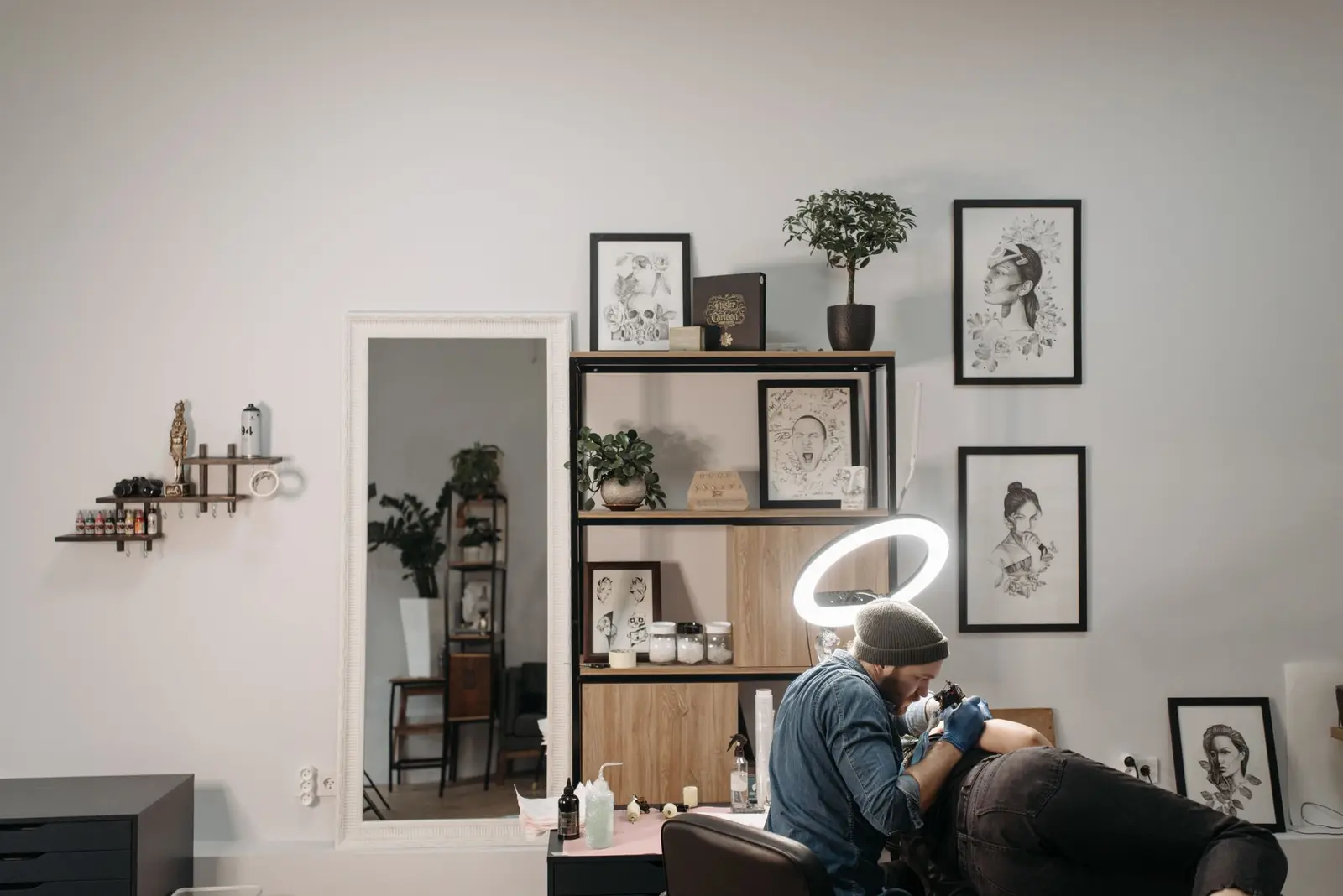
You'll usually see the design first and can ask for small changes. The artist then places a stencil on your skin so you can check the size and position in the mirror. Speak up if it isn't right; this is the moment to adjust.
During the session, the feeling is often described as scratching or a hot, sharp vibration. It differs by placement and by person. You can ask for a short break. Afterwards, the artist cleans the tattoo, covers it and explains aftercare.
Step 8: the first weeks of healing
A new tattoo is a fresh wound. Redness, tenderness, some flaking and itching are common in the first weeks. Follow your artist's aftercare instructions exactly; our general tattoo aftercare guide explains what usually happens. If something worries you, contact your artist or a doctor.
Common first-tattoo questions
- Will I regret it? Most regret comes from rushed choices. Taking time on the idea and choosing a specialist helps a lot.
- Can I bring a friend? Often yes, but ask first; space in the studio can be limited.
- Should I tip? Customs differ by country. If you're unsure, ask the studio or check how they handle it.
For tattoo shops
First-timers have the most questions, and they ask them in DMs. A website that explains your booking process, deposit rules, preparation and aftercare saves you time and makes nervous clients feel welcome. The OnlineTattoo.art tattoo website builder gives every artist a portfolio and booking form, with room for that information.
Photo: Tima Miroshnichenko / Pexels