How to choose a tattoo shop: a step-by-step checklist
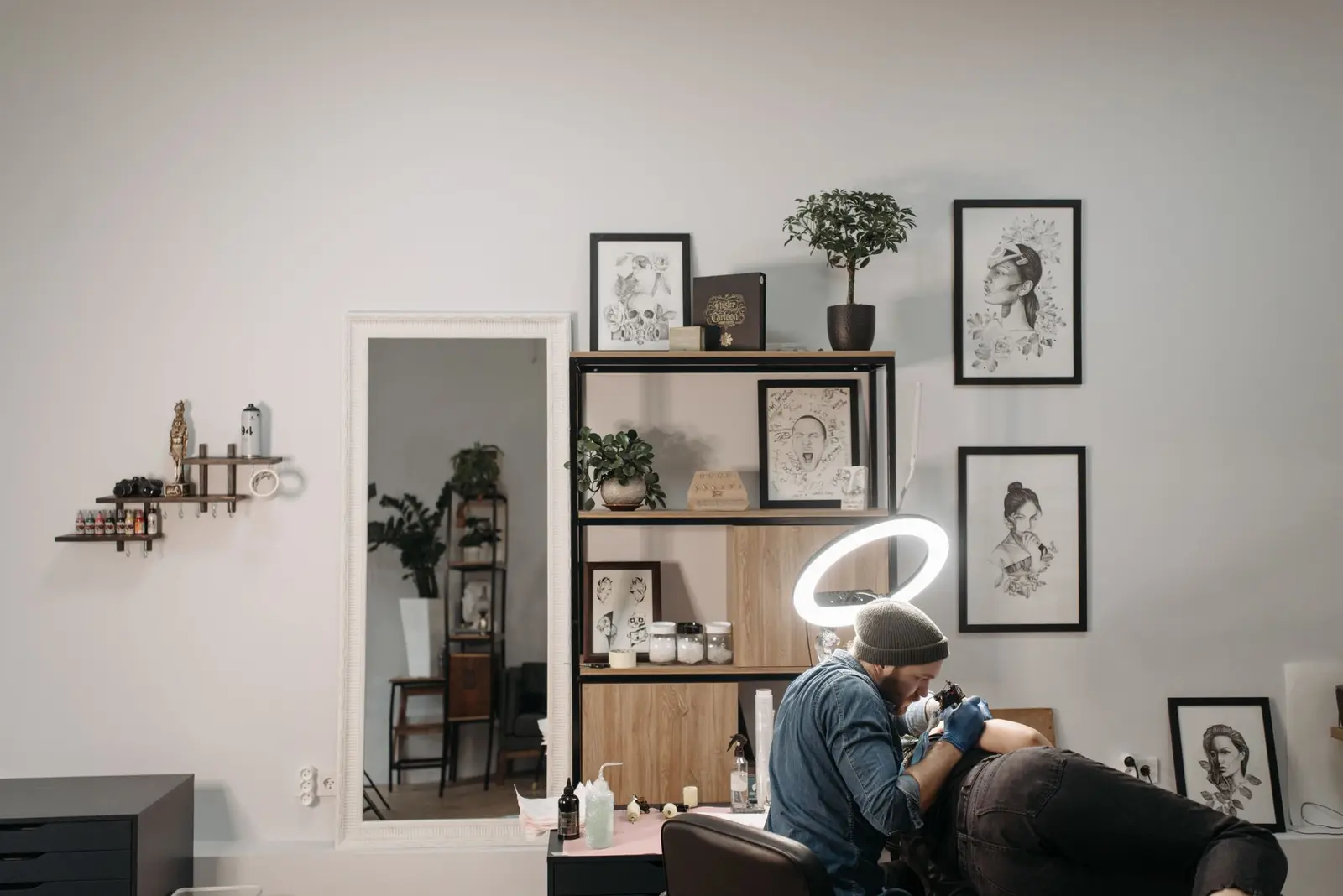
Choosing a tattoo shop really means choosing an artist: the person whose work matches the tattoo you want, in a studio that works cleanly and communicates clearly. Price and distance matter, but they come after that. This checklist takes you from "I want a tattoo" to a confident booking, step by step, whether it's your first tattoo or your tenth.
1. Start with the style, not the shop
Collect a few images of tattoos you like, ideally healed ones, and look at what they have in common. Thin lines or bold outlines? Colour or black and grey? Small and delicate or large and graphic? Then name the style: fine line, blackwork, traditional, realism, Japanese, lettering, illustrative.
Most good artists specialise. Knowing your style means you can look for a specialist instead of someone who does "a bit of everything". Our style guides on fine line, blackwork and traditional can help you put a name to what you like.
2. Make a shortlist
Look for studios near you, or a bit further for the right artist. Our tattoo shop directory lists studios by country and city, with the styles they work in and a link to their own website. Pick three to five artists to look at more closely.
3. Study the portfolio
This is the most important step. In each artist's portfolio, check:
- Several pieces in your style, not one lucky piece
- Healed photos: fresh tattoos always look sharp; healed photos show what you'll keep
- Line quality: straight lines stay straight, curves are smooth, outlines are even
- Shading and colour: smooth transitions, even fills, no patchy spots
- Similar size and placement to what you have in mind
If an artist only shows fresh work, ask whether they have healed examples.
Look beyond the best photo
Every artist puts their strongest pieces first. Scroll further and look at the overall level: is the quality consistent, or are there a few great pieces among many average ones? Look closely where lines meet and where shading ends. Be wary of heavily edited photos; very saturated colours or blurred skin can hide details. If the artist has a website, the portfolio there is often better organised by style than a social media feed.
4. Check hygiene and professionalism
A professional studio is clean and tidy, uses single-use needles and disposable gloves, and covers surfaces and equipment properly. Many countries have permit or registration rules for tattoo studios; you can ask a studio about them. Ask about age rules too: studios will ask for ID. A good studio answers these questions openly.
5. Look at how they communicate
How a studio handles your first contact tells you a lot:
- Is it clear how to book: a form, e-mail or messages?
- Do they explain their deposit and cancellation rules before you pay?
- Do they answer your questions clearly and within a reasonable time?
- Is information about opening hours, location and walk-ins easy to find?
Studios with a clear booking form with reference images usually make the process easier for both sides: you send everything at once, and they can answer properly.
6. Understand the price
Tattoo prices depend on size, detail, placement and the artist's experience. Some artists charge by the piece, others by the hour or per session, and flash usually has a fixed price. Ask for an estimate and what it includes. Be wary of choosing purely on price: a cheap tattoo that needs fixing later costs more.
Some studios have a minimum price for any tattoo, because setting up a clean workstation takes time and materials regardless of size. Ask about it if you're planning something very small.
7. Read the deposit rules
Most studios ask for a deposit to secure a custom appointment. Before you pay, check how much it is, whether it's deducted from the final price and what happens if you or the studio need to reschedule. Our article on tattoo deposit policies explains what's common.
8. Use the consultation
A consultation, in person or online, is your chance to check the match. Ask:
- Have you done similar pieces? Can I see healed examples?
- Would you adjust the size or placement so it ages well?
- How many sessions do you expect, and what will it cost?
- What aftercare do you recommend?
A good artist gives honest advice, even if it means changing your idea. That's a good sign, not a bad one.
9. Red flags
- No healed work in the portfolio
- Unwillingness to answer questions about hygiene
- Pressure to book or pay immediately
- No clear deposit or cancellation rules
- Copying another artist's custom design on request
10. Plan for aftercare
Ask the studio for written aftercare instructions and how touch-ups work. Read our general tattoo aftercare guide, and always follow your own artist's instructions.
City guides
Getting tattooed in a big city? Our city guides go deeper into London, Amsterdam and Berlin. You can also browse the directory by country, for example tattoo shops in the Netherlands or tattoo shops in the United Kingdom.
For shop owners
Clients go through exactly this checklist when they look at your shop. A website that shows each artist's portfolio by style, healed work, clear booking and deposit information and your hygiene and contact details answers most of their questions before they ask. That's what the OnlineTattoo.art tattoo website builder is built for.
The checklist in short
- Know your style
- Shortlist three to five specialists
- Check healed work and line quality
- Check hygiene, permits and age rules
- Read booking, deposit and cancellation rules
- Ask for an estimate
- Use the consultation
- Plan your aftercare
Photo: Pavel Danilyuk / Pexels