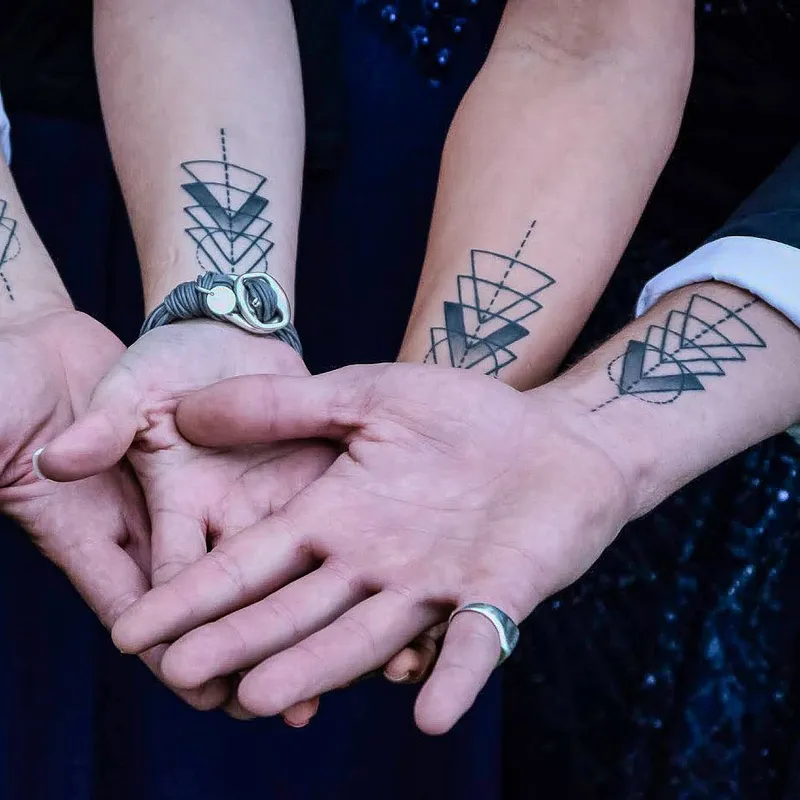
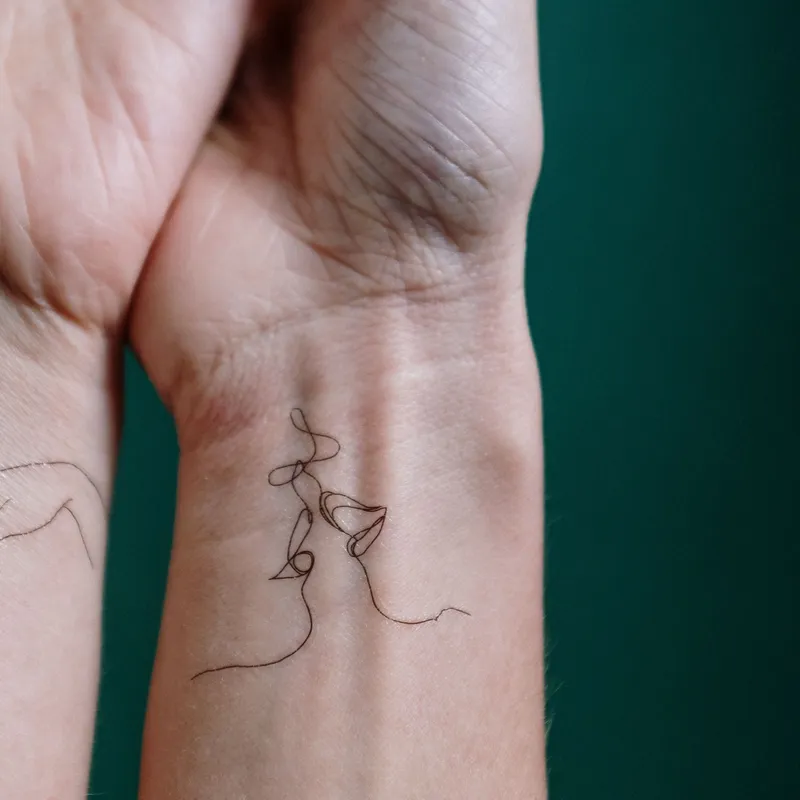
Minimalist and geometric tattoos: design, size and lasting results
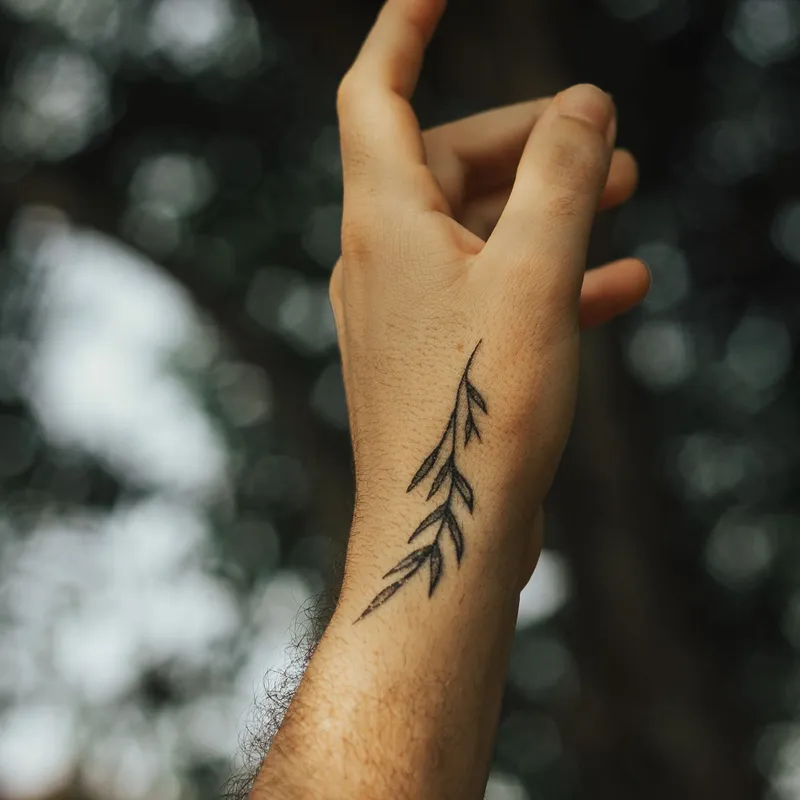
Minimalist tattoos use as little as possible: a few lines, a simple symbol, lots of empty skin. Geometric tattoos are built from precise shapes, such as lines, circles, triangles and patterns. The two often overlap, and both look deceptively simple. In practice, they leave no room for error: a slightly crooked line or uneven spacing is visible immediately. This guide explains what defines each style and how to get a result that lasts.
Minimalist tattoos
Minimalism is about reduction. The design says something with the fewest possible elements:
- A single line drawing of a face, animal or object
- Small symbols, initials or a date
- A simple outline of a mountain, wave or plant
- Abstract shapes and dots
The empty skin around the design is part of it. That's why placement and size matter so much: the tattoo needs room to breathe.
Geometric tattoos
Geometric tattoos are built from mathematical shapes and patterns:
- Clean lines, circles, triangles and polygons
- Sacred geometry and mandalas
- Repeating patterns and grids
- Dotwork shading in geometric forms
- Combinations of geometric shapes with natural motifs, such as an animal inside a polygon
Geometric work ranges from tiny and minimal to large pieces covering a sleeve or back, often overlapping with blackwork.
Why simple is hard
In a detailed illustrative tattoo, a small imperfection disappears among the other elements. In a minimalist or geometric piece, the eye goes straight to it. These styles demand:
- Steady, even linework: no wobbles, consistent thickness
- Precise symmetry and spacing, where the design calls for it
- Correct placement on a curved body: a perfect circle on paper has to look like a circle on an arm that isn't flat
- A good stencil and careful positioning: many artists spend extra time checking alignment before they start
That's why these styles are best done by artists who specialise in them.
Size and ageing
Minimalist designs are often small, and small designs with thin lines close together are the most likely to blur over the years. Lines soften as ink settles, and two lines placed very close can merge. Ways to help a minimalist or geometric tattoo age well:
- Give lines and shapes enough space between them
- Avoid very small text or tightly packed details
- Choose a size slightly larger than your first instinct, if your artist suggests it
- Protect the healed tattoo from the sun
Our guide to fine line tattoos goes deeper into how thin lines age.
Placement
Minimalist pieces work almost anywhere, but some placements are easier than others:
- Good options: inner forearm, upper arm, shoulder, collarbone, ankle area, back of the neck, ribs
- Harder for precise geometry: joints and areas that bend a lot, such as the elbow and knee, because shapes distort with movement
- Fingers and hands: popular for tiny designs, but these fade or blur faster, and many artists are open about that
How a placement feels during a session differs per person; your artist can tell you what to expect for the spot you have in mind.
Designing a minimalist piece
Because there are so few elements, each one has to count. A few tips:
- Start with the meaning or feeling, then simplify
- Bring references, but let the artist reduce the design to what works on skin
- Consider negative space: what you leave out matters as much as what you put in
- Think about the future: will you add more tattoos nearby? A minimal piece can become part of a larger composition later, or stand alone with space around it
Matching tattoos and small series
Minimalist designs are popular for matching tattoos with a friend, partner or family member, and for small series that grow over time. A few tips:
- Design them together with the artist, so the pieces relate to each other without being identical if you prefer variation
- Consider placement for each person separately; the same design can look different on different bodies
- Book together if you want to get them on the same day, and ask whether the studio can fit two or more people in one session
- For a series, decide on a common style, line weight and size, so the pieces look like a set even if they're done months apart
Keep the same artist for a series if you can. Small differences in line weight or style become noticeable when tattoos sit close together. If one person is getting their first tattoo, plan a little extra time.
Flash and small pieces
Many minimalist and geometric designs are offered as flash, often with a fixed price and size. That's an easy way to get a well-designed small piece quickly. Some studios also hold flash days for small designs.
Choosing an artist
Look at portfolios specifically for:
- Straight lines and clean circles in healed photos
- Consistent spacing in patterns
- Good placement on the body, with shapes that follow the anatomy
- Healed small work, not only fresh close-ups
Our tattoo shop directory lists studios by country and city with the styles they work in. Send a complete request with your idea, placement and size; a booking request form with reference images makes this easy.
For artists who specialise in clean work
Clients looking for minimalist or geometric tattoos zoom in on photos of line quality. Show sharp, well-lit healed photos and keep your portfolio organised by style. If you release small designs as flash, a flash page with prices lets clients choose without a long DM conversation. With the OnlineTattoo.art tattoo website builder, every artist has a portfolio by style, flash pages and a booking form.
Photo: Luiz Woellner Fotografia / Pexels