Geometric tattoos: lines, symmetry and patterns that fit the body
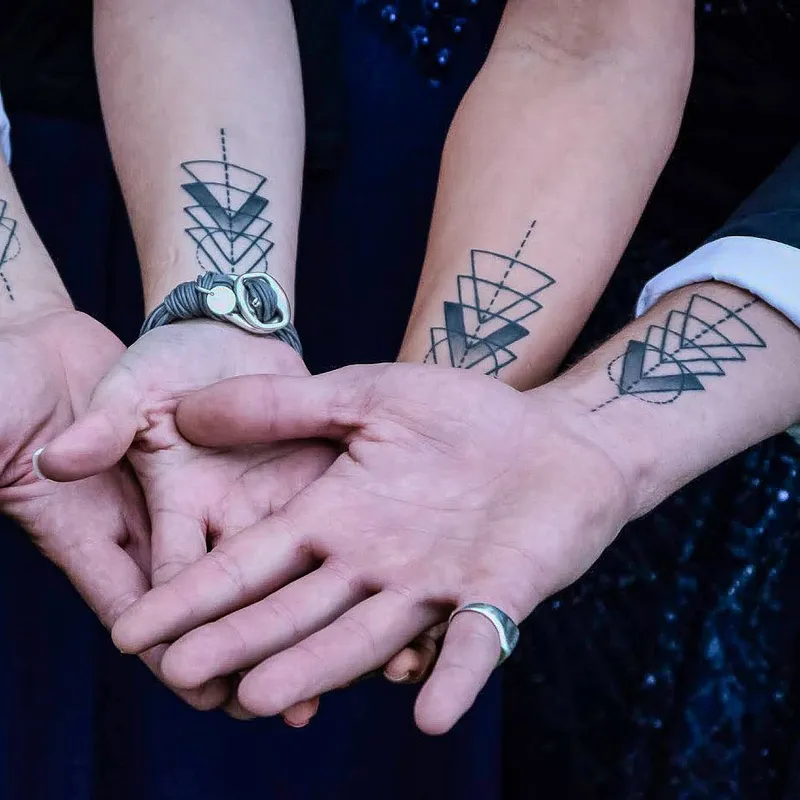
Geometric tattoos are built from shapes: lines, circles, triangles, hexagons and the patterns they form together. They can be a single triangle on a wrist or a full sleeve of interlocking patterns. What they all share is precision. A geometric design leaves nowhere to hide, so line quality, symmetry and placement decide whether it looks sharp or slightly off. This guide covers what defines the style, how it fits a curved body, how it ages and how to find the right artist.
What counts as geometric
Geometric tattooing covers a wide range of work:
- Simple shapes: single triangles, circles, lines and arrows
- Sacred geometry: figures such as the Flower of Life, Metatron's cube and nested polygons
- Patterns: hexagons, grids, waves and repeating tiles that cover larger areas
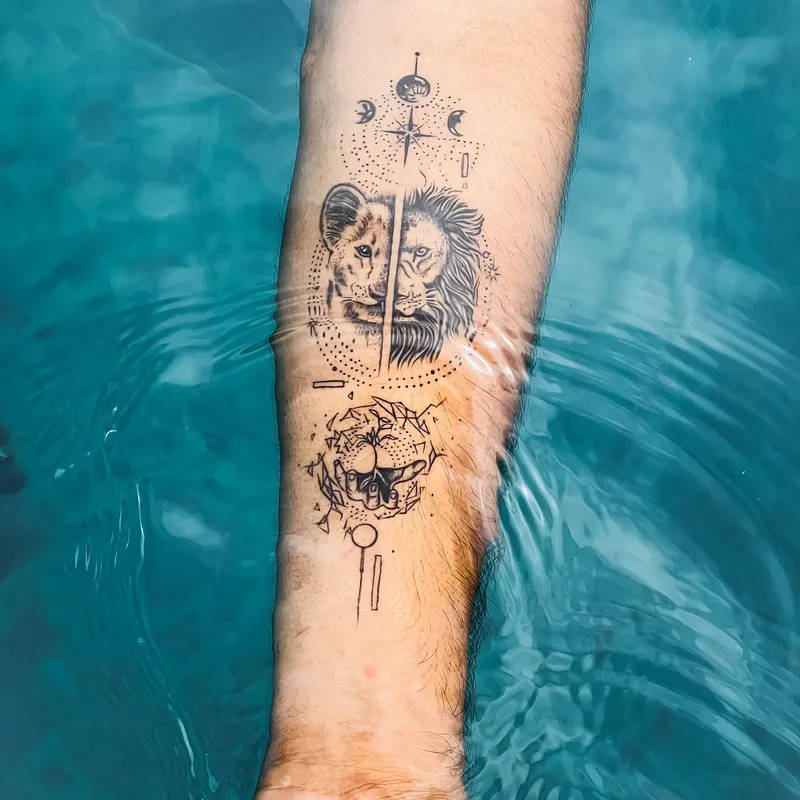
- Linework designs: animals, mountains or faces drawn with straight lines and angles
- Mixed pieces: geometric frames around flowers, animals or landscapes
Many geometric tattoos use dotwork for shading or solid black for contrast. Our dotwork tattoo guide explains how stippled gradients are made, and our guide to minimalist and geometric tattoos covers the small, simple end of the style.
Meaning and sacred geometry
Some people choose geometric tattoos purely for how they look: clean, balanced and modern. Others are drawn to the meaning that shapes have carried in different cultures. Circles are often linked to unity and cycles, triangles to direction or change, and figures such as the Flower of Life appear in decorative art and religious buildings from many periods. These meanings are interpretations, not fixed rules, and they differ by tradition and by person.
If a design comes from a specific religious or cultural tradition, such as a mandala or a yantra, it is worth learning a little about its background first. A good artist can help you find a design that carries the meaning you want without copying a sacred symbol out of context.
Line weight and precision
Geometric work lives and dies by its lines. A good geometric tattoo has:
- Straight lines that stay straight, without wobbles or breaks
- Even line weight where it should be even, and deliberate contrast where thick and thin lines meet
- Clean joins where lines meet at corners and intersections
- Accurate spacing in patterns, so repeats look regular
Lines that are very thin and very close together may look crisp on day one but can blur into each other as the skin ages. Experienced geometric artists design with enough space between lines and enough weight in the lines that carry the design.
Symmetry on a curved body
A shape that is perfectly symmetrical on paper is not automatically symmetrical on a body. Arms taper, shoulders are round and muscles move. Geometric artists deal with this in several ways:
- Drawing the design to fit your body, sometimes directly on the skin
- Placing the stencil while you stand or sit naturally, then checking from several angles
- Choosing a centre line that makes sense for the body part, such as the middle of the forearm or the spine
- Letting patterns bend with the body rather than forcing them flat
Expect the stencil stage to take time. A few extra minutes of checking can make the difference between a design that looks right from every angle and one that looks crooked when you move.
Placement and size
- Forearm and upper arm: popular for vertical designs and bands
- Sleeves: patterns can flow from shoulder to wrist, often mixed with blackwork
- Back and spine: symmetrical designs follow the spine naturally
- Chest and sternum: good for mirrored designs
- Calf and thigh: large, fairly flat areas for detailed patterns
Very intricate designs need size. If you want lots of detail, plan a bigger piece rather than shrinking a complex pattern into a small space.
How geometric tattoos age
Bold lines and solid black hold their shape well. Fine, closely spaced lines and small details soften first. Areas that move a lot, such as fingers and the sides of the hands, can blur lines faster. Clear spacing and confident line weight help a design stay readable for years. Aftercare in the first weeks matters for every tattoo, and protecting healed work from strong sun helps keep lines sharp.
Geometric and blackwork
Geometric work often overlaps with blackwork: large areas of solid black, bold bands and negative space where the skin forms the design. If you like heavy, high-contrast patterns, our blackwork tattoo guide explains what to expect from solid black, including healing and touch-ups.
Choosing a geometric artist
Geometric tattooing is a specialism. When you look at portfolios, check:
- Straight, unbroken lines and clean intersections
- Symmetry that holds on curved areas
- Patterns with consistent spacing
- Healed photos, to see how lines settle over time
- Larger projects, if you're planning a sleeve or back piece
Our tattoo shop directory lists studios by country and city, with the styles they work in. Use it to find artists near you who list geometric or blackwork work, then compare portfolios.
Booking
Custom geometric designs take careful drawing. In your request, include:
- The type of design and any meaning behind it
- Reference images, especially of healed geometric work you like
- Placement, approximate size and any tattoos nearby
- Whether the piece should connect to future work
Many artists take a deposit to reserve drawing time. A clear booking request with deposit makes that easy.
For geometric artists
Clients judge geometric work on straight lines and symmetry, and those are easy to distort with a wide-angle phone lens. Photograph straight on, in even light, and show healed work. If you draw geometric flash, you can offer it on your site: with the OnlineTattoo.art tattoo website builder your portfolio is sorted by style and your flash is ready to claim.
Photo: Jean Marc Bonnel / Pexels