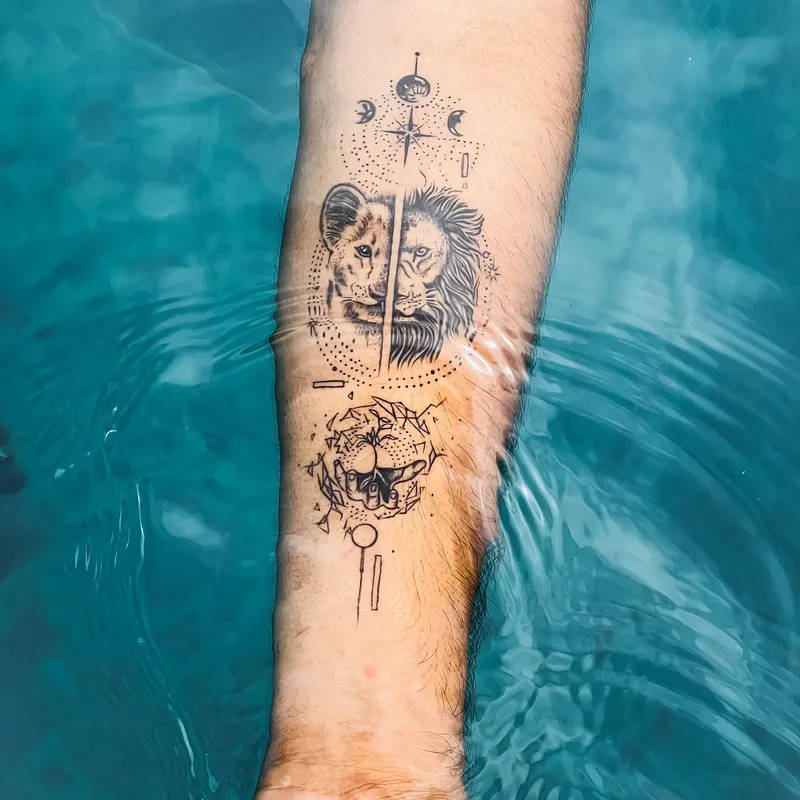
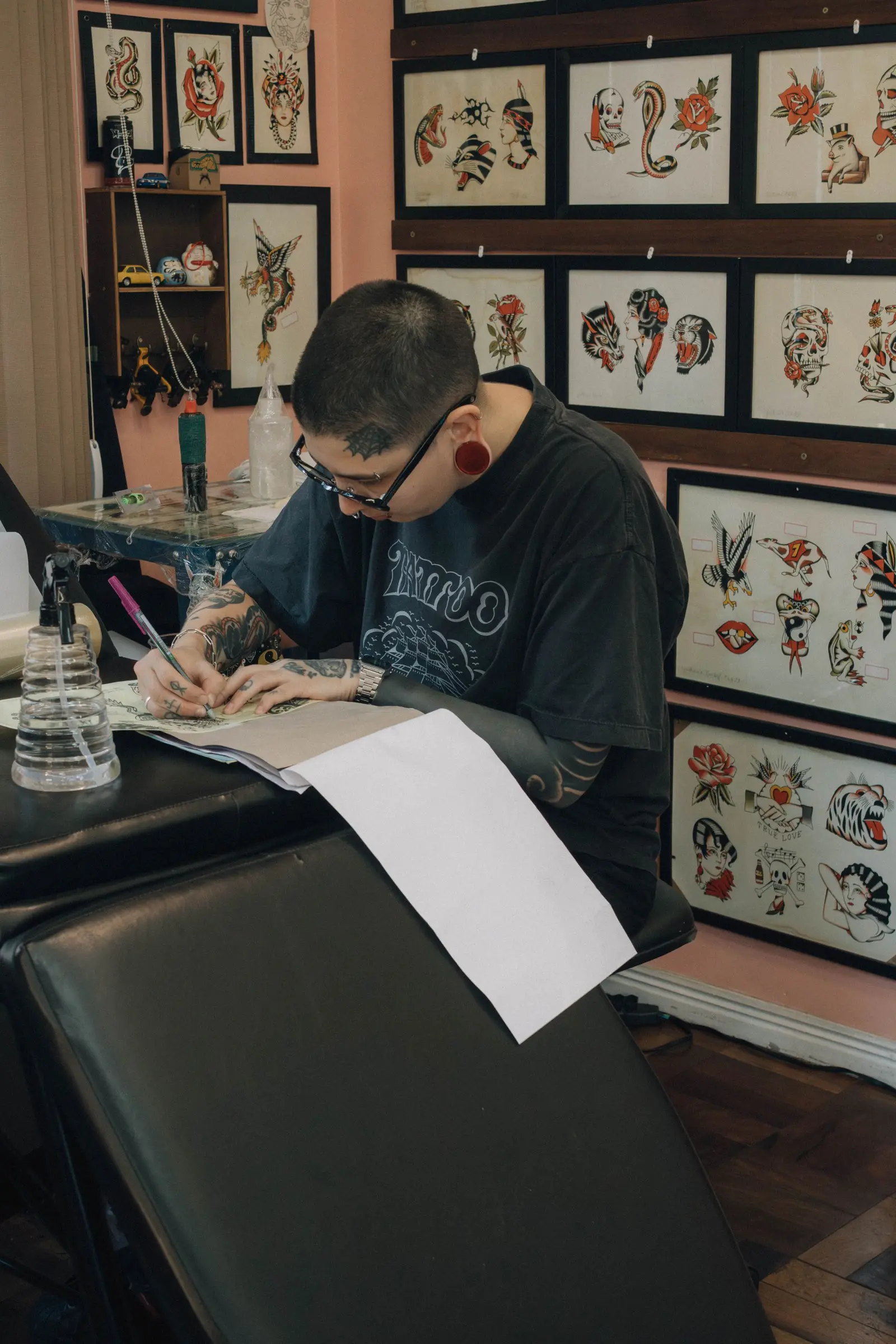
Dotwork tattoos: shading built from thousands of dots
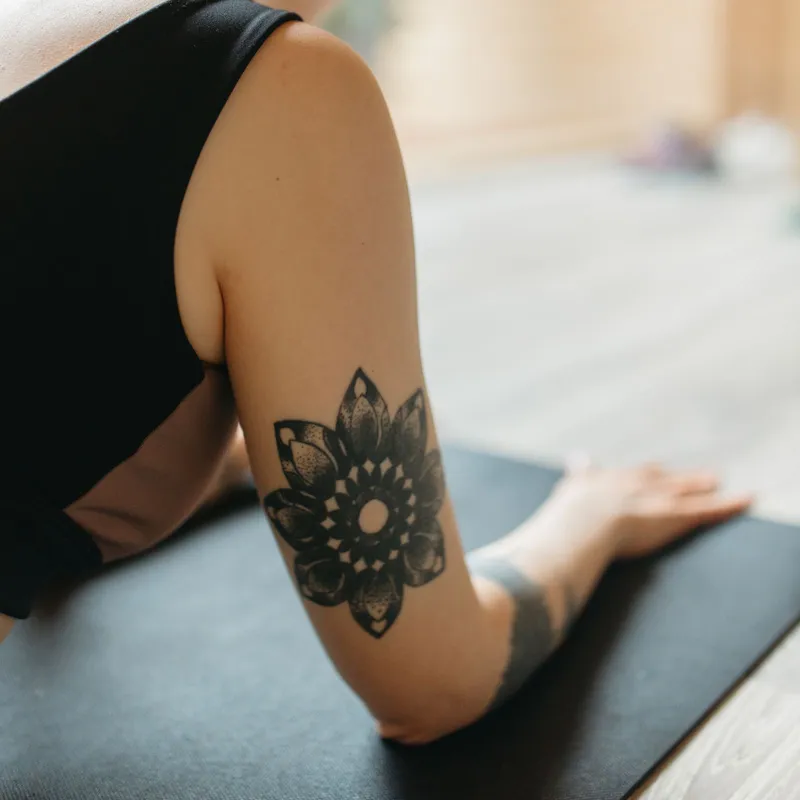
Dotwork tattoos build shading and texture from individual dots instead of smooth gradients or solid fills. Up close you see thousands of tiny points; from a distance they merge into soft tones, grainy textures and crisp patterns. The technique is used for mandalas, geometric designs, botanical pieces and portraits. This guide explains how dotwork works, what it suits, how it heals and ages, and how to choose an artist.
How dotwork works
In most tattooing, shading is made by moving the needle in smooth passes so ink spreads evenly. In dotwork, the artist places dots one by one, a technique also known as stippling. Where the dots sit close together, the area reads as dark; where they are spaced out, it reads as light. By changing density, artists create gradients, shadows and textures without solid fills.
Dotwork can be done with a tattoo machine set up for precise, controlled dots, or by hand with the hand-poke method, where each dot is placed without a machine. Both can produce excellent results. What matters is control: even spacing, consistent depth and clean transitions.
Hand-poke work is usually slower and is often chosen for its quiet, gentle process and slightly organic look. Machine dotwork can be faster and very precise. Neither is automatically better or less painful; it depends on the artist, the design and your skin. If the method matters to you, ask the artist which they use and why, and look at healed examples made with that method.
Where dotwork is used
Dotwork is a technique more than a single style, and it often appears together with others:
- Mandalas and ornamental designs, where dots fill petals and rings
- Geometric and sacred geometry, with dot gradients inside lines and shapes
- Botanical and nature motifs, such as flowers, leaves, moons and mountains
- Blackwork pieces, where dotwork softens the edge between solid black and skin
- Portraits and animals, where stippling gives a printed, engraved feel
Many dotwork designs are fully black. The grainy texture and the contrast with open skin give them a distinctive look that is softer than solid blackwork. Our blackwork tattoo guide shows how the two styles relate.
What makes good dotwork
- Controlled density: gradients that move smoothly from dark to light
- Even dots: similar size and depth, without blowouts or scarring
- Clean lines where needed: many designs combine dots with crisp outlines
- Breathing space: open skin that keeps the design readable
- A design that suits the body: patterns that follow the shape of an arm, shoulder or back
Placement and size
Dotwork needs enough size for the dots to form gradients. A small design can work if it is simple, such as a moon with a dotted shadow, but intricate mandalas and patterns look best at forearm, upper arm, calf, thigh, shoulder, chest or back size.
Symmetrical designs, such as mandalas, need careful placement. The centre of a mandala on a shoulder, elbow or knee shifts as you move, so your artist will position the stencil while you stand naturally. Expect some adjustments before the first dot.
Session time and pain
Placing dots one at a time takes longer than shading in smooth passes, so dotwork sessions can be long and large pieces may need several sessions. Many people find the sensation different from lining: lighter, but repetitive. How it feels depends on the person and the placement. Short breaks help, and a good artist will pace the session.
Healing and ageing
Dotwork often heals softer than it looks when fresh. Some dots settle lighter, which is normal; a touch-up after healing can even out gradients if needed. Follow your artist's aftercare instructions, and see our tattoo aftercare guide for what usually happens in the first weeks.
Over the years, all tattoos soften. In dotwork, tightly packed areas can slowly merge into a more solid tone, while widely spaced dots can fade. Designs with clear contrast between dense and open areas tend to stay readable longest. Protecting healed tattoos from strong sun helps keep the dots crisp.
Dotwork, fine line and blackwork
- Fine line uses thin, single lines with little or no shading; our fine line tattoo guide explains the style
- Dotwork builds shading from dots, often inside fine or bold lines
- Blackwork relies on solid black areas and strong graphic shapes
Many artists combine all three. If you like a specific mix, collect references that show it, and look for an artist whose portfolio shows that same mix.
Choosing a dotwork artist
Dotwork is a specialism. In portfolios, look for:
- Smooth stippled gradients without patches or lines
- Healed photos, so you can see how the dots settle in skin
- Symmetry that holds on curved areas of the body
- Consistent quality in both small and large pieces
Our tattoo shop directory lists studios by country and city, with the styles they work in. Dotwork and geometric specialists often travel for guest spots, so check their dates as well.
Booking dotwork
Custom mandalas and patterns are drawn to fit your body, which takes time. In your request, include:
- The type of design, such as mandala, geometry, botanical or mixed
- Reference images of dotwork you like, ideally healed
- Placement and approximate size, plus nearby tattoos
- Whether you prefer machine or hand-poke, if it matters to you
Many artists take a deposit before drawing a custom design. A clear booking request with deposit makes that step straightforward.
For dotwork artists
Dotwork is hard to photograph: fine texture disappears in harsh light and glare. Shoot in soft daylight, close enough to show the stippling, and add a wider shot for the whole design. With the OnlineTattoo.art tattoo website builder your portfolio is sorted by style, and you can show designs that are available to book as flash.
Photo: Anastasia Shuraeva / Pexels