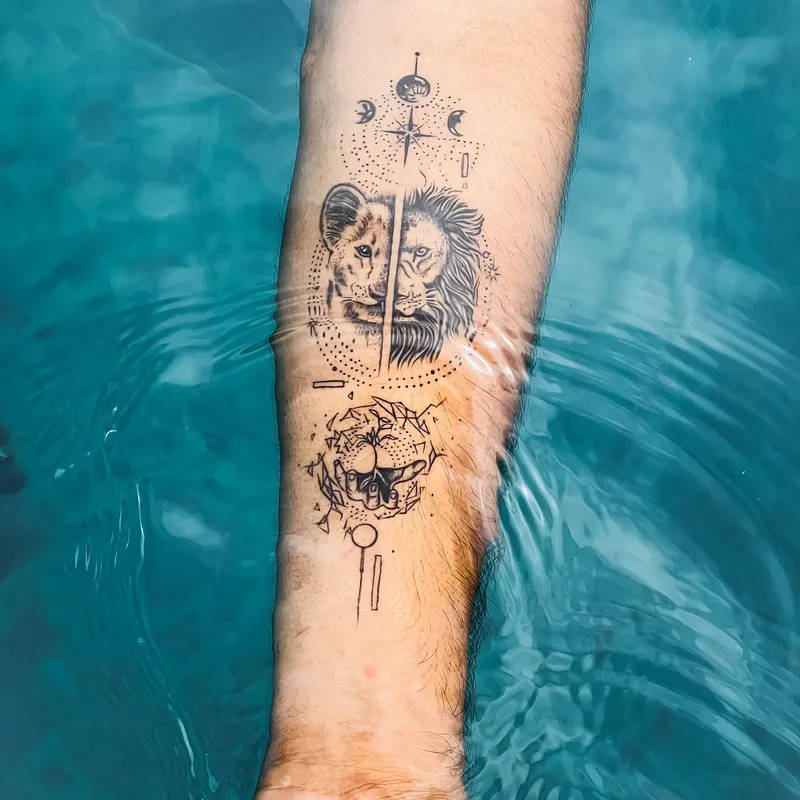
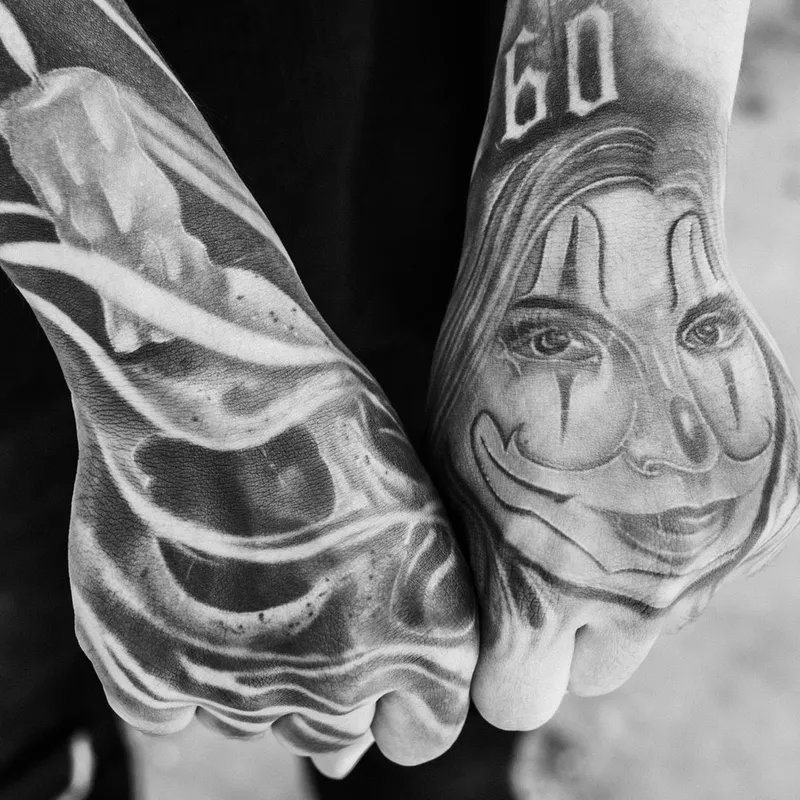
Sketch tattoos: the look of a drawing that isn't finished
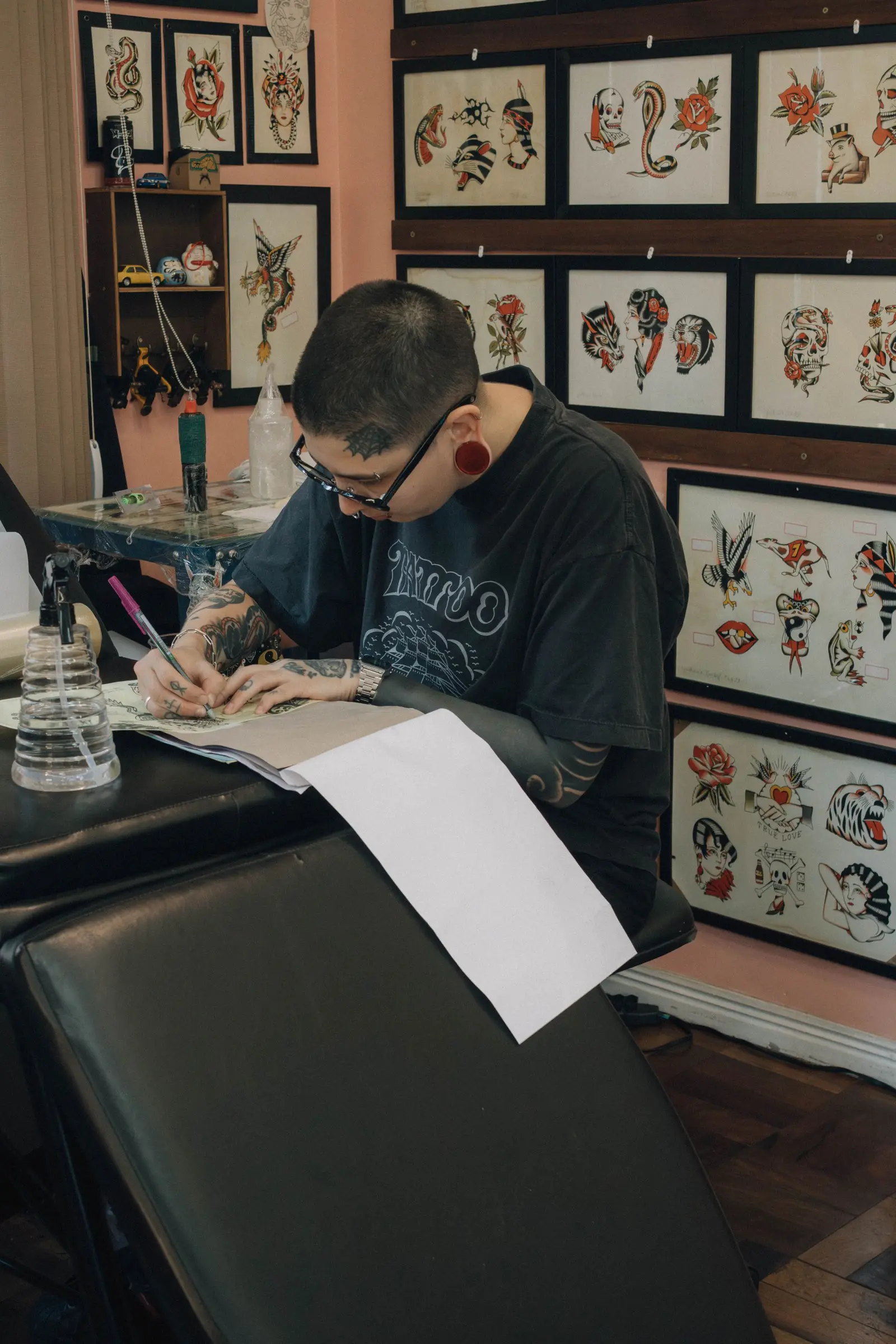
A sketch tattoo looks like a page from an artist's sketchbook: loose lines, visible construction lines, hatching and edges that fade out as if the drawing was never quite finished. That unfinished quality is exactly the point. It gives the tattoo movement and a personal, handmade feel. This guide explains what defines the style, how it differs from neighbouring styles, how it ages and what to look for in an artist.
What defines a sketch tattoo
Sketch tattoos imitate the process of drawing, not only the result. Typical features:
- Construction lines: the light guide lines an artist draws before the final line, left visible on purpose
- Multiple, overlapping strokes instead of one clean outline
- Hatching and cross-hatching for shading, like pencil or pen
- Loose, open edges where the drawing fades into skin
- Occasional splashes or smudges, sometimes with a touch of colour
Done well, it looks effortless. In reality, it takes a lot of control to make deliberate "mistakes" that look natural and still read clearly on skin.
From sketchbook to stencil
Many sketch tattoos start as real drawings: pencil or ink on paper, scanned and then reworked into a stencil. The artist decides which construction lines stay, which become stronger and which are dropped, because not every line on paper will work on skin. Some details are added freehand during the session to keep the loose feel. That translation step is where experience shows. A drawing that looks perfect in a sketchbook can be too faint or too busy as a tattoo, and a good sketch artist knows how to keep the spirit of the drawing while making it tattoo-proof.
Popular subjects
- Animals and birds, often in motion
- Portraits and figures, especially hands, faces and eyes
- Botanicals: flowers, leaves and branches
- Anatomical drawings, such as hearts, skulls and bones
- Objects and architecture, sketched in perspective
Many sketch artists draw their own designs and offer them as flash, which is a good way to get a piece in an artist's pure style.
Sketch versus fine line and illustrative
- Fine line: clean, thin, single lines with little shading; see our fine line tattoo guide
- Illustrative: a drawn quality, but usually with finished outlines and deliberate shading; see our illustrative tattoo guide
- Sketch: deliberately unfinished, with construction lines, overlapping strokes and hatching
- Black and grey realism: smooth gradients without visible lines; see our black and grey tattoo guide
In practice, many artists blend these. A design can be mostly illustrative with sketchy edges, or a fine line piece with a few loose construction lines.
Placement and size
Sketch tattoos contain many thin, close lines, so they need enough size to stay readable. Forearms, upper arms, calves, thighs, shoulder blades and ribs work well. Very small sketch designs can turn into a grey haze over the years, because the space between the lines closes up as ink spreads.
Flat areas with little friction help the fine lines last. Hands, fingers and feet are less suitable for detailed sketch work.
How sketch tattoos age
This is the main thing to discuss with your artist. All tattoos soften over time as ink spreads slightly in the skin. In sketch tattoos, that affects:
- Very light construction lines, which may fade or disappear
- Dense hatching, which can merge into a solid tone
- Thin overlapping strokes, which can blur together
Experienced sketch artists design with that in mind. They make the key lines a little stronger, keep enough space between hatching lines and avoid very fine detail at small sizes. Ask to see healed sketch work from a few years ago. Sun protection for healed tattoos helps keep the lines crisp.
Adding colour
Some sketch tattoos include a splash of watercolour-like colour behind the drawing. It can look lovely, but soft colour without an outline fades sooner than black lines. A good artist keeps the black drawing strong enough to carry the piece on its own, so it still works when the colour softens.
Combining sketch with other tattoos
Sketch work sits comfortably next to fine line, illustrative and black and grey pieces, because they share thin lines and a drawn feel. Next to bold traditional or bright new school work, a delicate sketch can look lost. If you're adding a sketch piece to an arm or leg that already has tattoos, leave some open skin around it so the loose edges can breathe.
Choosing a sketch artist
Sketch tattooing is a specialism. When you look at portfolios, check:
- Line control: loose lines that still look deliberate, not shaky
- Clear structure: you can read the subject instantly, despite the sketchy style
- Hatching with even spacing
- Healed photos, ideally more than a year after the session
- Original designs and available flash
Our tattoo shop directory lists studios by country and city, with the styles they work in. Many sketch artists work in private studios or travel for guest spots.
Booking
Sketch tattoos depend on the artist's hand, so give them room to interpret. In your request, include:
- The subject and the mood you're after
- References from the artist's own portfolio that you like
- Placement and a realistic size for the amount of detail
- Whether you'd like colour or only black
A clear booking request with deposit helps the artist plan drawing time. If the artist has suitable flash, claiming an existing design is often the quickest route.
For sketch artists
Your sketchbook is your shop window. Show the original drawings next to the tattoos and include healed photos to reassure clients about ageing. With the OnlineTattoo.art tattoo website builder you can sell tattoo flash online next to a portfolio sorted by style, so clients can claim a design directly.
Photo: Mayara Caroline Mombelli / Pexels