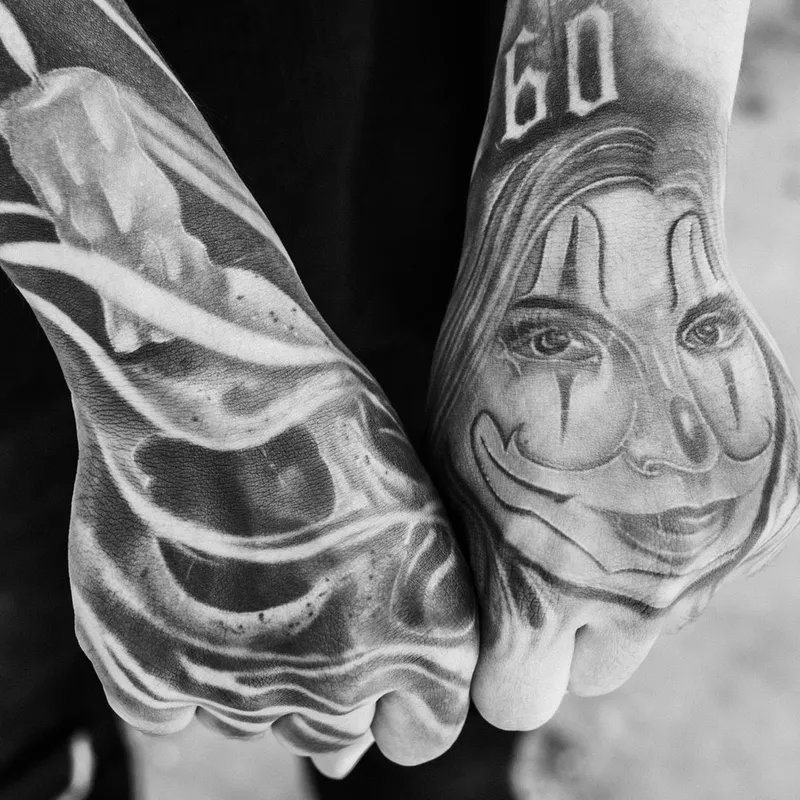
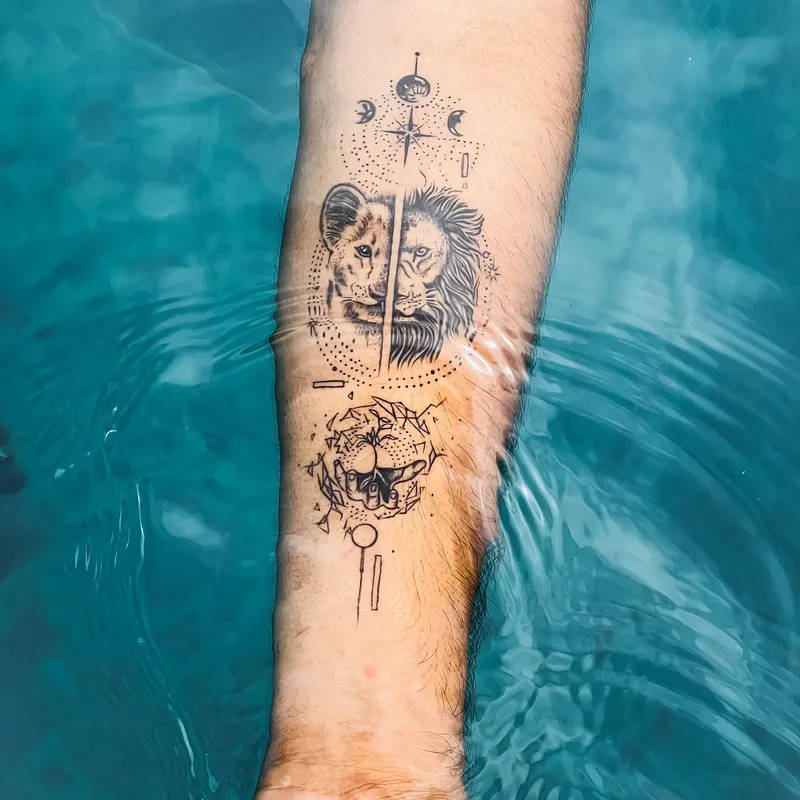
Black and grey tattoos: shading, contrast and lasting detail
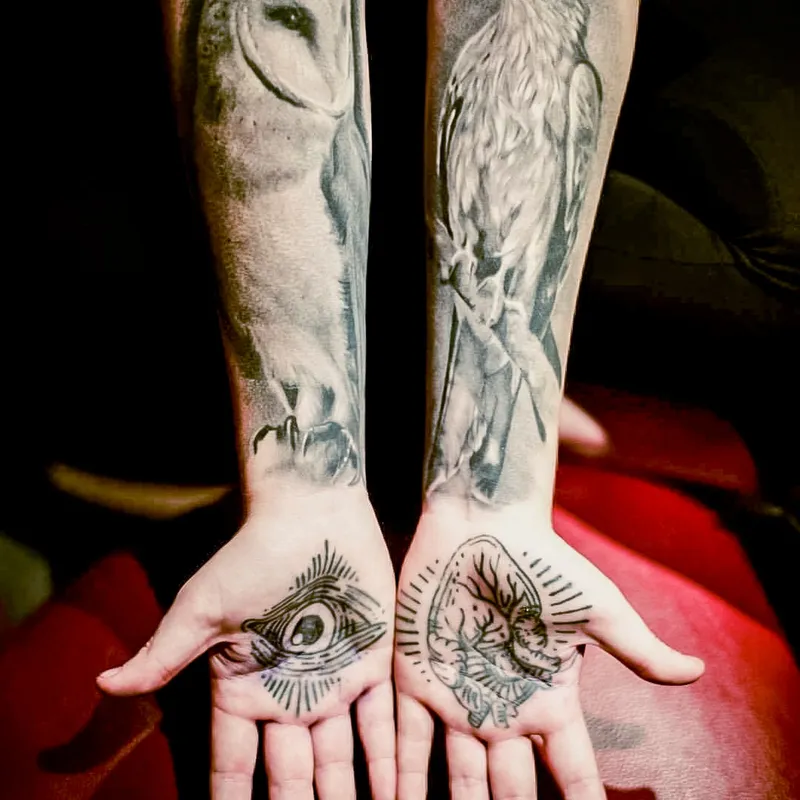
A black and grey tattoo uses only black ink and its diluted shades to build an image: no colour, just light, shadow and contrast. It is one of the most versatile approaches in tattooing, used for portraits, religious imagery, animals, lettering and large compositions. This guide explains how the style works, where it comes from, which subjects suit it and what to look for in an artist.
What black and grey means
Black and grey is less a set of motifs than a way of shading. The artist builds tones from solid black to the lightest grey, and lets the skin itself act as the brightest highlight. Those greys are made by diluting black ink, often called grey wash, or by using ready-mixed grey shades. Smooth transitions between those tones create depth and form.
Because there is no colour to separate shapes, contrast does all the work. The darkest darks and the open skin of the highlights decide whether a piece reads clearly from a distance.
Where the style comes from
Black and grey tattooing is often traced to Mexican-American communities in Los Angeles in the second half of the twentieth century, where fine single-needle shading and religious and family imagery became a distinctive tradition. That history is closely tied to Chicano culture and is still visible in many black and grey pieces today. From there the technique spread into studios worldwide and became the basis of much modern realism.
Today you'll find black and grey in many styles: realism, illustrative work, Japanese-inspired pieces, lettering and ornamental designs. It's a technique more than a single look.
What defines a good black and grey piece
- Strong contrast: true blacks next to clean, open highlights
- Smooth gradients: grey tones that blend without blotches or harsh steps
- A clear light source: shadows fall consistently, so shapes look three-dimensional
- Readable composition: the main subject stands out from the background
- Balanced texture: skin, fur, stone or fabric each rendered so they are recognisable
Popular subjects
- Portraits of people and animals
- Religious and spiritual imagery, such as statues, praying hands and angels
- Animals, especially lions, wolves, owls and birds of prey
- Clocks, roses, skulls and architecture
- Script and lettering, often combined with imagery
- Large sleeves and back pieces with flowing backgrounds of smoke or clouds
Black and grey versus realism and blackwork
Black and grey is a technique, realism is a goal. Many realistic tattoos are black and grey, but not all black and grey work is realistic: illustrative and ornamental pieces use the same shading in a stylised way. Our realism tattoo guide goes deeper into photographic work.
Blackwork is different again. It relies on large areas of solid black and strong graphic shapes rather than soft grey gradients.
Placement and size
Soft gradients need room. A portrait or detailed animal works best at forearm, upper arm, calf, thigh, chest or back size, where the artist can create enough steps between dark and light. Very small black and grey pieces risk turning into a grey blur over time, because fine shading softens as the skin ages.
Flat, stable areas are easiest. Areas that bend a lot, such as the inner elbow or the side of the knee, can distort a face or a detailed image.
How black and grey ages
All tattoos soften over time. In black and grey, the lightest greys fade first and fine details spread slightly. That is why contrast matters so much: a design with deep blacks and open highlights keeps its shape for many years, while a piece that is mostly mid-grey can lose definition.
Sun is the biggest factor you control. Protecting healed tattoos from strong sun helps the greys stay smooth. In the first weeks, follow your artist's instructions; our tattoo aftercare guide explains what usually happens during healing.
Adding a touch of colour
Some clients like a black and grey piece with one accent colour, such as a red rose, blue eyes or a gold detail. Used sparingly, an accent can draw the eye to the focal point. Used too much, it competes with the shading. If you're considering it, ask your artist early, because the composition and contrast are planned differently when one element will be in colour. Adding colour years later is possible too, but it is easier to plan from the start.
Choosing an artist
Black and grey looks simple, but smooth shading takes years of practice. When you look at portfolios, check:
- Gradients without patches, lines or scarring
- Deep blacks that are evenly packed
- Highlights that stay clean rather than muddy
- Healed photos, ideally a year or more after the session
- Consistency across subjects: portraits, animals and textures
If you're drawn to delicate single-needle work, compare it with the line quality you'd look for in fine line tattoos; the same steady hand matters.
Our tattoo shop directory lists studios by country and city, with the styles they work in. Many artists specialise in black and grey, so it's worth comparing a few.
Preparing your request
- Good-quality reference photos, especially for portraits: sharp, well lit, with visible detail in the face
- The size and placement you have in mind
- Any existing tattoos nearby, so the new piece can connect
- What should be the focus, and what can fade into the background
Portraits and large pieces often take more than one session. A clear booking request with deposit helps the artist plan time for the design and the sessions.
For black and grey artists
Clients judge black and grey on smooth shading and contrast, which phone photos often flatten. Photograph in soft, even light, avoid shine and show healed work. With the OnlineTattoo.art tattoo website builder your portfolio is sorted by style, so clients looking for black and grey find your best pieces quickly.
Photo: Aleks Marinkovic / Pexels