Chicano tattoos: history, imagery and fine black and grey
Chicano tattooing is one of the most influential styles in modern tattooing, and one with deep roots in a specific community. Its soft black and grey shading, elegant script and imagery of faith, family and neighbourhood life grew out of Mexican-American culture in the south-west of the United States. This guide explains where the style comes from, what defines it, how to approach it with respect and how to find an artist who knows it well.
Where chicano tattooing comes from
Chicano is a term many Mexican-Americans use for their own identity, especially since the civil rights movement of the 1960s and 1970s. The tattoo style grew in those communities, particularly in and around Los Angeles. Its roots are often traced to the pachuco culture of the 1940s, known among other things for a small cross tattooed on the hand, and to tattooing in neighbourhoods and prisons, where artists worked with improvised tools, a single needle and black ink.
Those limits shaped the look: fine lines, soft grey shading and careful detail, without colour. From the 1970s onwards, chicano artists brought the style into professional studios, and fine-line black and grey spread worldwide. Our black and grey tattoo guide explains the shading technique that chicano tattooing helped make famous.
What defines the style
- Black and grey: soft gradients and deep blacks, usually without colour
- Fine line work: delicate detail made with single or small needle groupings
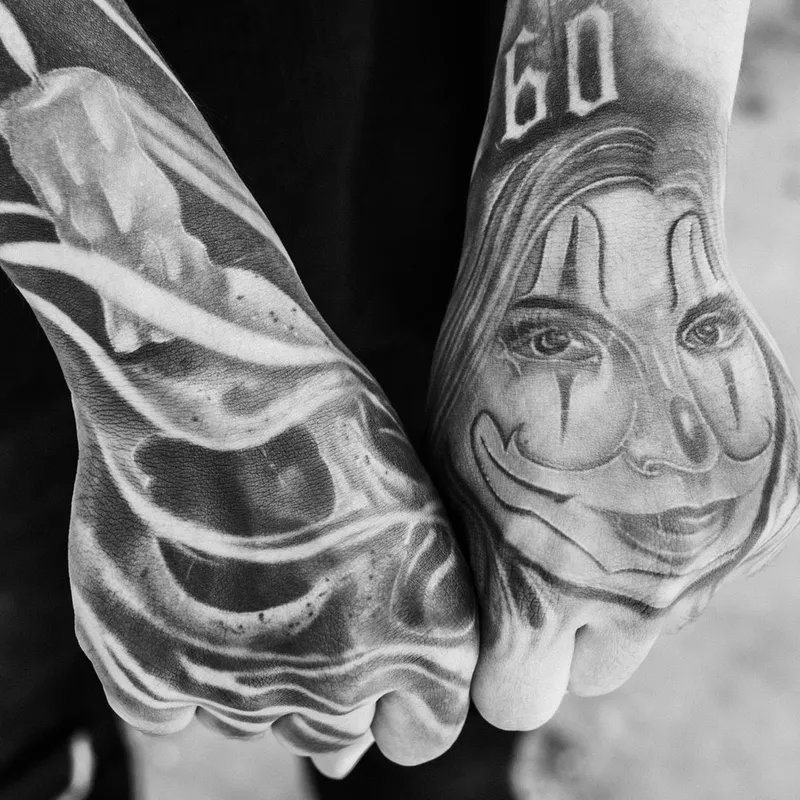
- Realistic portraits with a stylised elegance
- Script and lettering: flowing script and ornate blackletter, often with names, family words or neighbourhood references
- Layered compositions: several images combined into one piece, framed by smoke, clouds, roses or rays of light
Common imagery
Chicano tattoos often express faith, family, love, loss, pride and the realities of life. Common images include:
- Religious imagery: the Virgin of Guadalupe, Christ, praying hands, rosaries and crosses
- Portraits of women, sometimes with hats, flowers or tears
- Payasa and payaso clowns, often linked to the phrase "smile now, cry later"
- Lowriders and classic cars
- Roses, clocks and money, often as symbols of time, love and fortune
- Family names and memorial pieces
Many of these images carry personal and cultural meaning, and some symbols can carry specific meanings in certain communities or contexts. If you're drawn to a particular image, ask your artist what it means and where it comes from.
Lettering in chicano tattooing
Lettering is a pillar of the style. Chicano script is known for its flowing capitals, fine hairlines and dramatic flourishes, and blackletter is often given an elaborate, decorative treatment. Names, dates and words such as "familia" or "mi vida loca" are common. Because chicano script uses very fine lines, size and spacing matter for how it ages; our lettering tattoo guide explains why.
Respect for the culture
Chicano tattooing is admired worldwide, and many artists outside the community work in a chicano-inspired style. A few things help you approach it respectfully:
- Learn the history: the style is tied to the experiences of Mexican-American communities, including discrimination, incarceration, faith and family pride
- Be thoughtful with symbols: neighbourhood names, numbers and certain signs can have specific meanings; don't copy them without knowing what they mean
- Seek out artists from the tradition or artists who have learned it seriously and credit its roots
- Make it personal: a design built around your own family, faith or story is better than copying someone else's
Chicano art beyond tattoos
The tattoo style is part of a wider chicano visual culture that includes murals, lowrider car painting, pen-and-ink drawings and the handkerchief drawings known as paños, often made by people in prison and sent to family. Many tattoo artists started out drawing in that tradition. Looking at that wider art helps you understand why chicano tattoos combine religious imagery, portraits, lettering and ornament the way they do, and it can give you ideas for a piece that feels authentic rather than copied.
Placement and size
Chicano compositions are often large: full sleeves, back pieces, chest pieces and stomach pieces. Single portraits and lettering work well on forearms, upper arms, the neck and the hands. Fine shading needs some size to stay smooth, so very small chicano-style portraits can lose detail over time.
How chicano tattoos age
Good black and grey ages well when contrast is strong. The lightest greys and finest hairlines in script soften first, so a well-designed piece balances delicate detail with deep blacks. Protecting healed tattoos from strong sun helps keep the shading smooth. The realistic side of chicano work behaves much like any realism; our realism tattoo guide covers what to expect.
Choosing an artist
- Look for an artist whose portfolio has plenty of chicano or fine-line black and grey work
- Check smooth gradients, deep blacks and clean highlights
- Look closely at the script: even hairlines, consistent capitals and good spacing
- Ask for healed photos
- Talk about the meaning behind the images you'd like to use
Our tattoo shop directory lists studios by country and city, with the styles they work in.
Booking
- Share the story behind your piece: names, faith, places and people
- Provide clear photos for portraits
- Mention placement, size and how the piece might grow
- Expect larger compositions to take several sessions
A clear booking request with deposit helps the artist plan design and session time.
For chicano and black and grey artists
Clients look at shading, script and how well you know the tradition. Show healed black and grey work in good light, include lettering close-ups and tell your story. With the OnlineTattoo.art tattoo website builder your portfolio is sorted by style, next to a booking form for detailed requests.