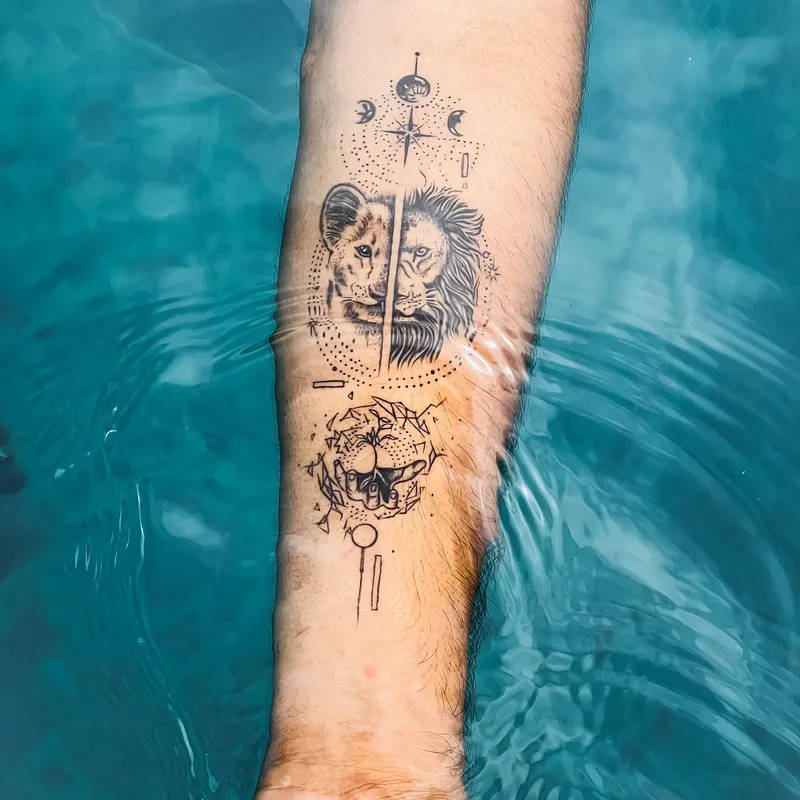
Illustrative tattoos: when a tattoo looks like a drawing
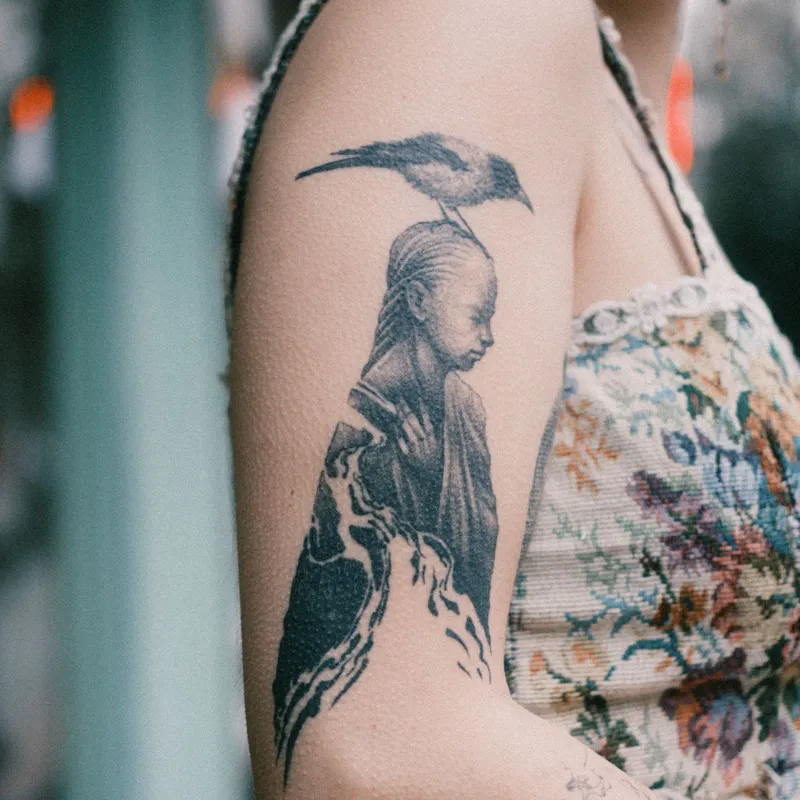
An illustrative tattoo looks like it came from a sketchbook, a printed book or an etching: visible line work, deliberate shading and a clear artistic hand. It is one of the broadest styles in tattooing, and that's part of its appeal. Two illustrative artists can work in completely different ways and both be excellent. This guide explains what ties the style together, which techniques and motifs are common, how it ages and how to find an artist whose drawing style suits you.
What makes a tattoo illustrative
Illustrative is less a fixed set of rules than an approach. What illustrative pieces usually share:
- Visible line work: outlines and inner lines are part of the look, not hidden
- A drawn quality: the tattoo looks like an illustration rather than a photograph
- A personal hand: the artist's way of drawing is recognisable across pieces
- Selective detail: some areas are rendered carefully, others are left open or loose
Many illustrative tattoos are black and grey, but colour illustrative work is common too. The style sits between traditional and realism: more freedom and detail than traditional, more stylisation than realism.
Influences and techniques
Illustrative artists draw on many sources, and you'll often see them in the work:
- Etching and engraving: fine parallel lines and cross-hatching, like old book illustrations
- Woodcut and linocut: bold, carved-looking lines and solid areas
- Botanical and scientific illustration: precise plants, insects and anatomy
- Ink drawing and sketching: loose lines, washes and unfinished edges
- Comics and graphic novels: strong silhouettes and dramatic contrast
Shading techniques vary from smooth grey wash to hatching, stippling and solid black. Our black and grey tattoo guide explains how tones are built with black ink alone.
Popular motifs
- Animals and birds, often with a narrative or symbolic twist
- Botanicals: flowers, branches, mushrooms and herbs
- Figures and portraits in a stylised, drawn manner
- Landscapes and scenes, framed in shapes such as circles or arches
- Mythology and literature: characters, symbols and stories
Many illustrative artists draw their own designs and release them as flash, ready-to-book pieces you can claim. That's a good way to get a piece in an artist's pure style.
Illustrative versus neighbouring styles
- Neo-traditional: bold outlines, rich colour and ornament; our neo-traditional tattoo guide explains the difference
- Fine line: very thin lines and minimal shading; see our fine line tattoo guide
- Sketch: imitates a pencil sketch, with construction lines left visible
- Realism: aims for a photographic look without visible lines
The lines between these are blurry, and many artists mix them. Choose an artist on the look you like, not on the label.
Colour or black and grey?
Both work. Black and grey illustrative pieces lean on line work and shading, and they combine easily with other tattoos because they don't compete in colour. Colour illustrative work can look like a painted plate from an old book or a modern print, often with a limited palette of two or three colours. If you already have tattoos, think about how a new piece will sit next to them. A consistent approach across a sleeve, for example all black and grey with one accent colour, usually looks calmer than a mix of everything.
Trusting the artist's interpretation
The best illustrative tattoos usually happen when the artist has some freedom. Instead of bringing a finished image to copy, bring the idea, the feeling and a few examples of the artist's own work that you like. Then let them translate it into their style. Copying another artist's design is not only unfair to that artist, it also rarely leads to a better tattoo. Most illustrative artists will gladly talk through sketches and adjust details before the session.
Placement and size
Because illustrative work often contains fine lines and textures, it needs room. Forearms, upper arms, calves, thighs, shoulders and backs work well. Very detailed designs shrunk to a small size can lose their texture as lines soften with age. Ask your artist what size the design needs to stay clear.
The style also adapts well to sleeves and larger compositions. Several illustrative pieces by the same artist usually sit well together because they share a hand.
How illustrative tattoos age
Bolder outlines and solid blacks hold well. Fine hatching, delicate textures and pale washes soften first. A good illustrative artist designs with that in mind, using enough contrast and spacing so the piece still reads in ten years. Sun protection for healed tattoos helps, and good aftercare in the first weeks matters for every piece.
Choosing an illustrative artist
Because illustrative is so broad, the most important question is whether you love the way an artist draws. When you browse portfolios:
- Look for a consistent personal style across different subjects
- Check line quality: confident lines, clean hatching, no shaky edges
- Look at healed work, especially fine textures
- Check whether the artist offers flash in their style
Our tattoo shop directory lists studios by country and city, with the styles they work in. Many illustrative artists work in private studios or travel for guest spots.
Booking
For a custom illustrative piece, give the artist room to interpret. Include:
- The subject and what it means to you
- One or two references of the artist's own work that you like
- Placement and approximate size
- How much freedom you're comfortable giving
A clear booking request with deposit helps the artist plan drawing time.
For illustrative artists
Your drawing style is what clients book you for, so show it clearly. Group your portfolio by style, show healed work and publish your available flash. With the OnlineTattoo.art tattoo website builder you can sell tattoo flash online next to your portfolio, so clients can claim a design directly.
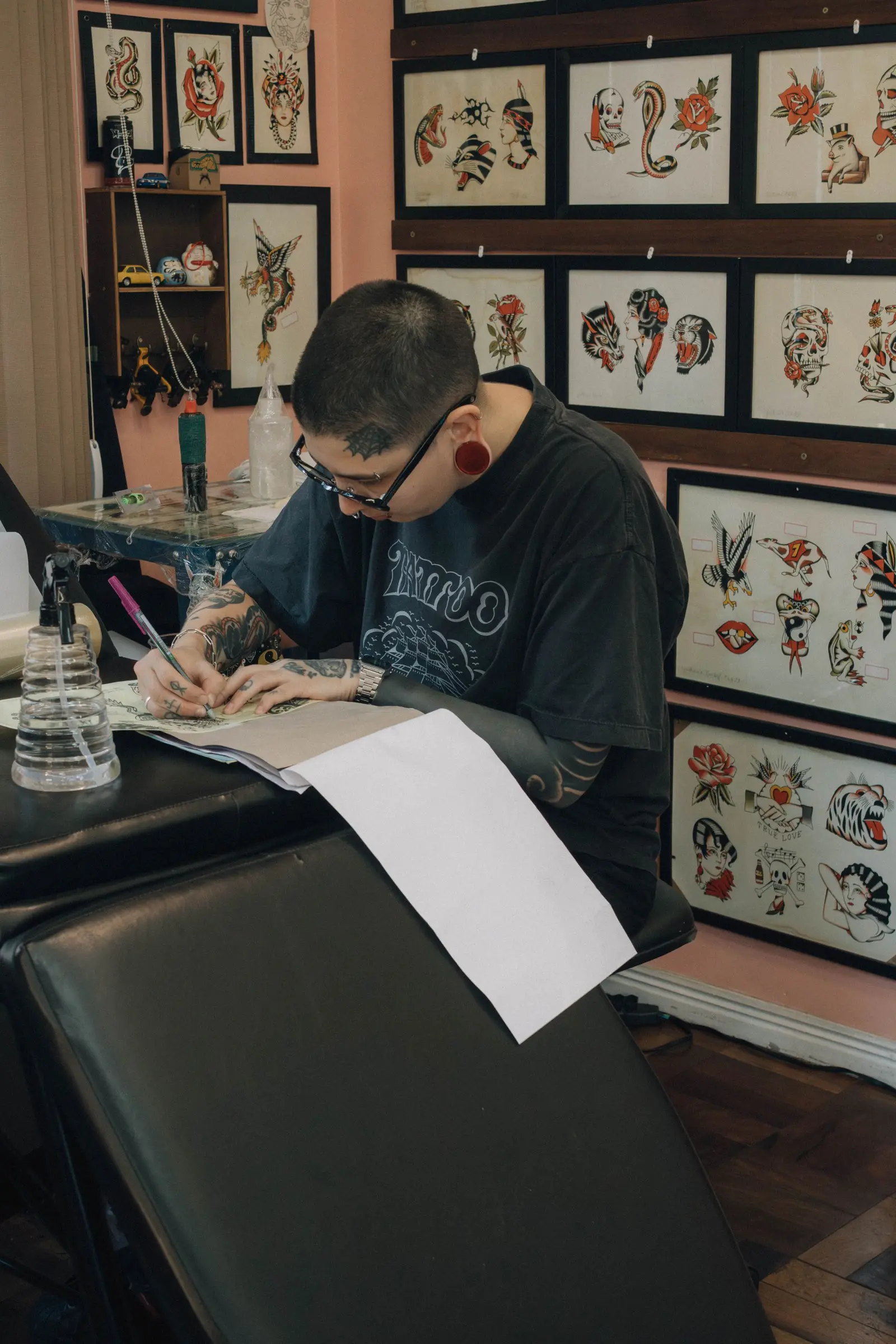
Photo: Mert Coşkun / Pexels