Neo-traditional tattoos: bold lines with more depth and colour
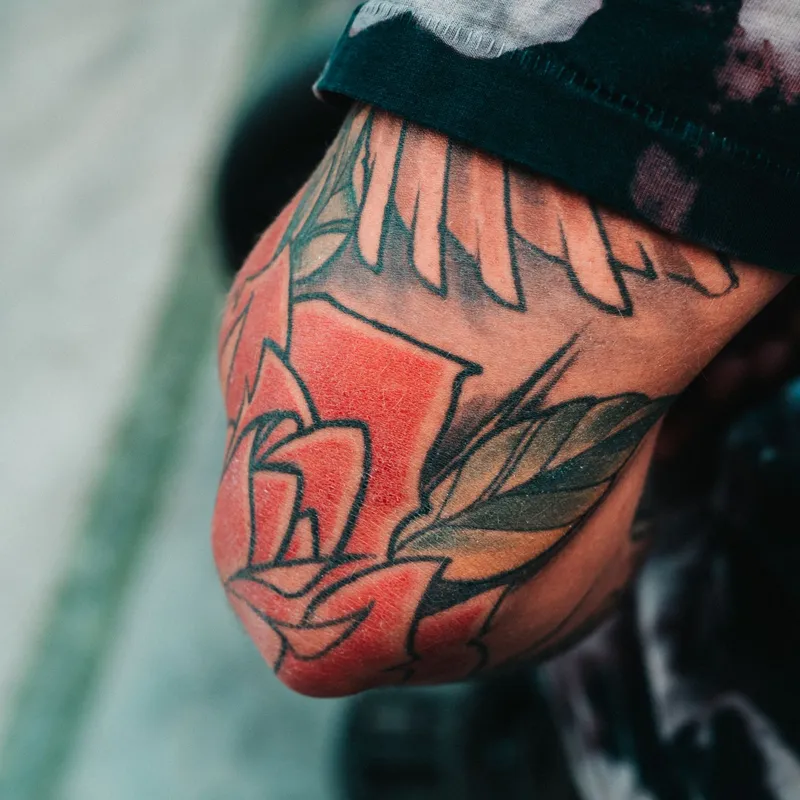
Neo-traditional tattoos take the bold outlines and readable shapes of traditional tattooing and add more depth, more colour and more detail. Think of a fox with a jewelled collar, a rose with layered petals, or a portrait of a woman framed by ornaments. This guide explains where the style comes from, what makes it recognisable, how it ages and how to find an artist who does it well.
Where neo-traditional comes from
Neo-traditional grew out of Western traditional tattooing. Traditional work, also called old school or American traditional, uses heavy black outlines, a limited colour palette and simple, iconic motifs. Our traditional tattoo guide explains that foundation in detail.
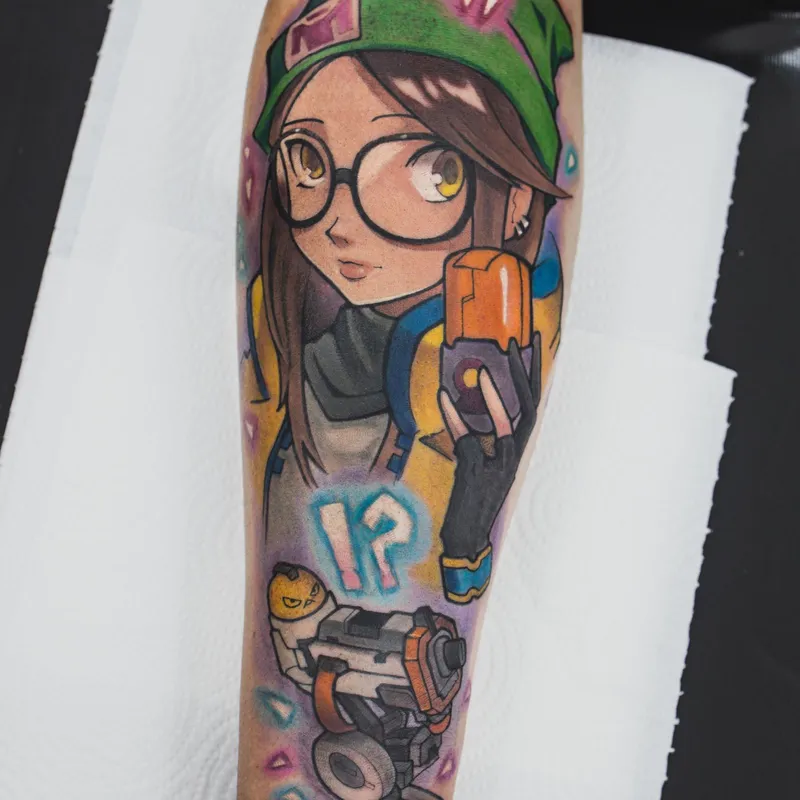
From the late twentieth century onwards, artists began to push those rules. They kept the strong outline, because it makes a tattoo readable and helps it last, but added a wider range of colours, softer blends, more shading and more illustrative detail. The result sits between traditional and illustrative work. It is often compared to decorative poster art and book illustration, with flowing frames, ornaments and stylised faces.
What defines the style
Neo-traditional is easy to recognise once you know what to look for:
- Bold outlines with varied line weight: thick outer lines, thinner lines inside for detail
- A wider colour palette: deep reds, teals, purples, ochres and muted tones, not only primary colours
- Depth and dimension: shading and colour blends that make shapes look rounded
- Decorative details: jewels, lace, frames, filigree and flowers around the main motif
- Stylised realism: subjects look natural but simplified, with clear shapes rather than photographic detail
The balance matters. Too little outline and the tattoo drifts into realism; too few details and it reads as traditional.
Popular motifs
Neo-traditional suits subjects with strong silhouettes and room for decoration:
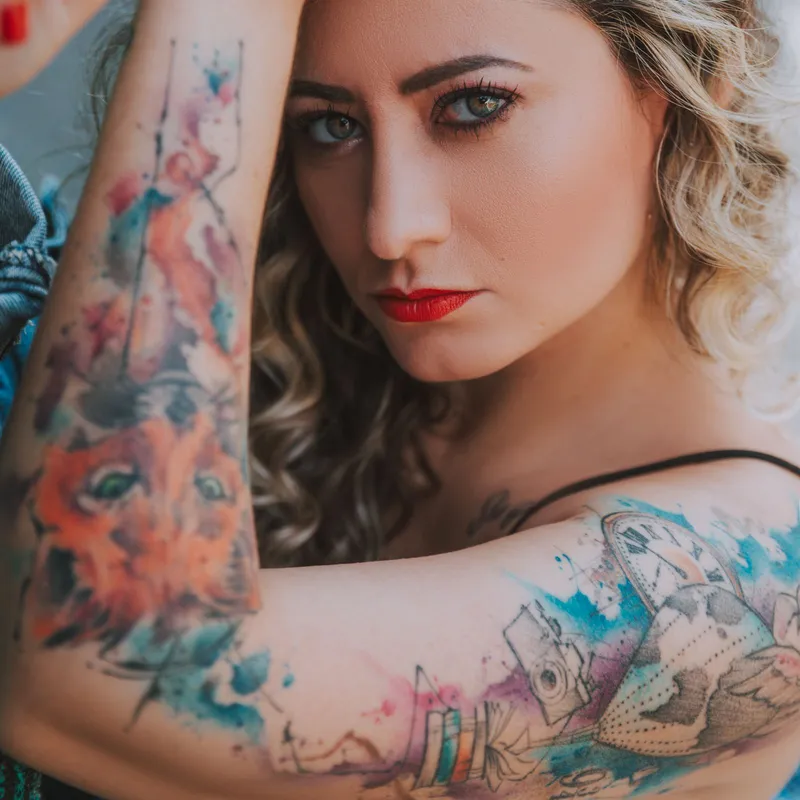
- Animals: foxes, wolves, owls, tigers, deer, snakes and birds, often with flowers or ornaments
- Flowers: roses, peonies, chrysanthemums and other blooms with layered petals
- Portraits of women: stylised faces with headdresses, flowers or jewellery
- Objects: lanterns, daggers, hourglasses, keys, crystals and potion bottles
- Frames: ornamental borders that turn a motif into a self-contained piece
Many clients bring a personal subject, such as a pet or a favourite flower, and ask the artist to translate it into the style.
Placement and size
Because of the detail and colour, neo-traditional needs some room. A palm-sized piece can work for a simple motif, but most designs look best at forearm, upper arm, calf, thigh, chest or back size. Small pieces with many details can lose clarity as the skin ages.
The style also works well for sleeves and larger compositions. Several neo-traditional pieces can be connected with filler such as leaves, flowers or ornaments. If you plan to build a sleeve over time, tell your artist so that each piece leaves room for the next.
How neo-traditional ages
The bold outline is a big advantage. It holds the shape of the design as colours soften over the years. Saturated colour and solid black tend to stay readable for a long time, while very pale tones and fine details fade sooner, especially on areas that get a lot of sun or friction.
Good aftercare in the first weeks matters for every tattoo. Our tattoo aftercare guide covers what usually happens while a tattoo heals. After that, protecting the tattoo from strong sun helps keep the colours bright.
Colour choices and skin tone
Colour is a big part of neo-traditional, and the same palette can look different on different skin. Deep, saturated tones and strong contrast usually stay readable on most skin tones, while very light colours such as pale yellow or pastel pink may show less, especially on darker skin. A good artist will adapt the palette to your skin rather than copying a reference exactly. Ask to see healed colour work on skin similar to yours, and be open to suggestions about which tones will hold best.
It also helps to think about how the piece will sit next to your other tattoos. A neo-traditional piece in rich jewel tones can clash with soft watercolour or sit nicely next to traditional work. Bring photos of nearby tattoos to the consultation so the artist can plan colours and outlines that work together.
Neo-traditional versus related styles
- Traditional: simpler motifs, fewer colours, little blending
- Neo-traditional: traditional outlines with more colour, depth and ornament
- Illustrative: often looser line work and a wider mix of techniques
- New school: cartoon-like proportions and very bright, saturated colour
- Realism: no visible outline; the aim is a photographic look, as explained in our realism tattoo guide
Choosing an artist
Look for an artist whose portfolio shows several neo-traditional pieces, not one or two. In those pieces, check:
- Clean, confident outlines with deliberate variation in thickness
- Smooth colour blends without patchiness
- A consistent look across different subjects
- Healed photos, so you can see how the colour settles
Our tattoo shop directory lists studios by country and city, with the styles they work in, which helps you compare artists near you.
Booking a neo-traditional piece
Neo-traditional designs are usually drawn for you, so a good request saves time on both sides. Include:
- The subject and any details that matter, such as a specific animal or flower
- Two or three reference images of neo-traditional work you like
- Placement and approximate size
- Whether the piece should connect to existing or future tattoos
Many artists ask for a deposit before they start drawing. A clear booking request with deposit keeps the process simple.
For neo-traditional artists
Clients choose neo-traditional artists on colour and line quality, so show both clearly. Photograph fresh and healed work in soft daylight, keep pieces sorted by style and show your available designs. With the OnlineTattoo.art tattoo website builder you get a portfolio sorted by style and a booking form that asks for subject, placement, size and references.
Photo: Jan Kopřiva / Pexels