Watercolor tattoos: soft colour, structure and how they age
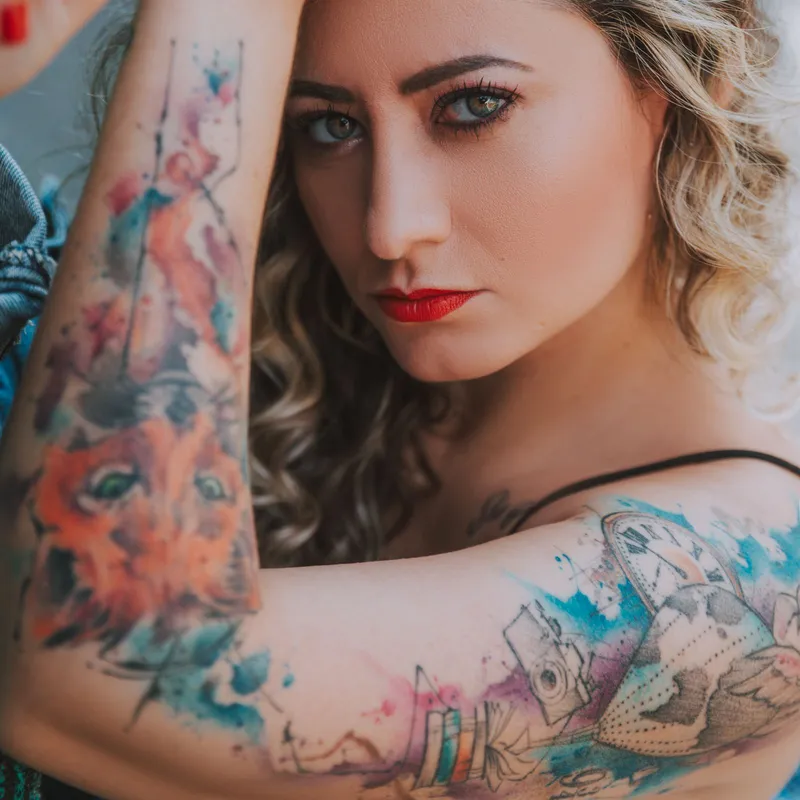
A watercolor tattoo imitates the look of a watercolour painting: soft washes, colour that bleeds beyond the lines, splashes and gradients that seem to fade into the skin. It's a loose, painterly style that can look beautiful, but it raises a fair question: how does soft colour without strong outlines hold up over the years? This guide explains the style, the choices that help it last and how to choose an artist.
What defines watercolor tattoos
Typical features of the style:
- Soft washes of colour with smooth transitions
- Colour that extends past the shapes, like paint running on paper
- Splashes, drips and brushstroke textures
- Little or no black outline in the purest form
- Often combined with fine linework, sketch lines or a small black element for structure
Popular subjects are animals, flowers, birds, landscapes and abstract shapes, often with a lot of empty skin around them.
Why many artists add black
The question most people ask about watercolor tattoos is how they age. All tattoos soften over time as ink settles, and light colours can fade more than dark ones, especially with sun exposure. Without a dark structure, a soft colour wash can lose its shape and contrast over the years.
That's why many artists who work in this style add some black: fine outlines, sketch lines, a dark shadow or a graphic element. The black keeps the design readable while the colour provides the softness. Others work without black but build in stronger colour and contrast where it matters. Ask the artist how they approach it and to see healed examples that are a few years old.
Choices that help a watercolor tattoo last
- Some black or dark structure to hold the shape
- Enough contrast: a mix of deeper and lighter tones, not only pastels
- A size that gives the colour room; very small watercolor pieces tend to lose definition sooner
- Sun protection once healed
- Careful aftercare during healing; our tattoo aftercare guide explains what usually happens
Skin tone and colour
How colours look depends partly on skin tone. Some light colours show less strongly on darker skin. A good artist will advise which colours and how much contrast will work on your skin, and will show healed colour work on similar skin tones. Ask about it during the consultation.
Why people choose watercolor
People are drawn to watercolor because it feels light, personal and painterly. It can make a tattoo look less like a sticker and more like an artwork that belongs to the body. It's also flexible: the same subject can be bold and bright or barely there. For people who love colour but don't want the strong outlines of traditional work, it offers a different route. The trade-off is that it needs more thought about structure and ageing than many other styles, which is why the choice of artist matters so much.
Placement
Watercolor works well on areas with room for soft transitions and that get relatively little friction: shoulder, upper arm, forearm, back, ribs, thigh and calf. Hands, fingers and feet are less suitable for soft colour, because colour there tends to fade faster.
Watercolor combined with other styles
Many of the most durable watercolor pieces are hybrids:
- Fine line plus watercolor: delicate linework with a soft wash behind it; see our fine line guide
- Sketch style plus colour: loose pencil-like lines with splashes of colour
- Geometric plus watercolor: precise shapes combined with soft colour, overlapping with minimalist and geometric tattoos
- Blackwork plus colour accents: strong black with a single watercolor element
Touch-ups and colour refreshes
Colour work sometimes needs a second pass after healing, when you can see how the colour settled in your skin. Many artists offer a touch-up within a set period. Over the years, some people choose to have soft colour refreshed, especially on areas that get a lot of sun. Ask your artist how they handle touch-ups, whether there are costs and how long to wait after the first session.
Subjects that suit watercolor
Watercolor works best with subjects that benefit from softness and movement:
- Flowers and plants, where colour can bloom beyond the petals
- Birds, fish and other animals in motion
- Landscapes, skies and abstract shapes
- Designs with a strong silhouette, so the shape stays readable even as edges soften
Subjects that depend on fine detail, such as small text or faces, usually need more structure. Discuss with your artist which elements stay soft and which get a firmer line.
Choosing a watercolor artist
Colour work is a specialism. Look for:
- Healed watercolor photos, ideally a year or more after the session
- Smooth, even colour without patchy areas
- A clear approach to structure, whether with black or with contrast
- Several pieces in the style, not one experiment
Our tattoo shop directory helps you find studios by country and city, with the styles they work in.
Booking a watercolor piece
- Bring references for the subject and for the colour palette you like
- Mention whether you're open to some black structure
- Think about size and placement with room for soft edges
- Ask about touch-ups: colour sometimes needs a second pass after healing
A booking request form with reference images makes it easy to share palettes and examples.
For colour artists
Colour photographs differently from black and grey. Shoot in soft daylight with correct white balance, so the colours on screen match the skin. Show healed work and label it. With the OnlineTattoo.art tattoo website builder, every artist has a portfolio sorted by style next to a booking form. If you draw colour flash, a flash page with prices lets clients choose a design directly.
Photo: Criativa Pix Fotografia / Pexels