New school tattoos: cartoon energy, bold colour and big personality
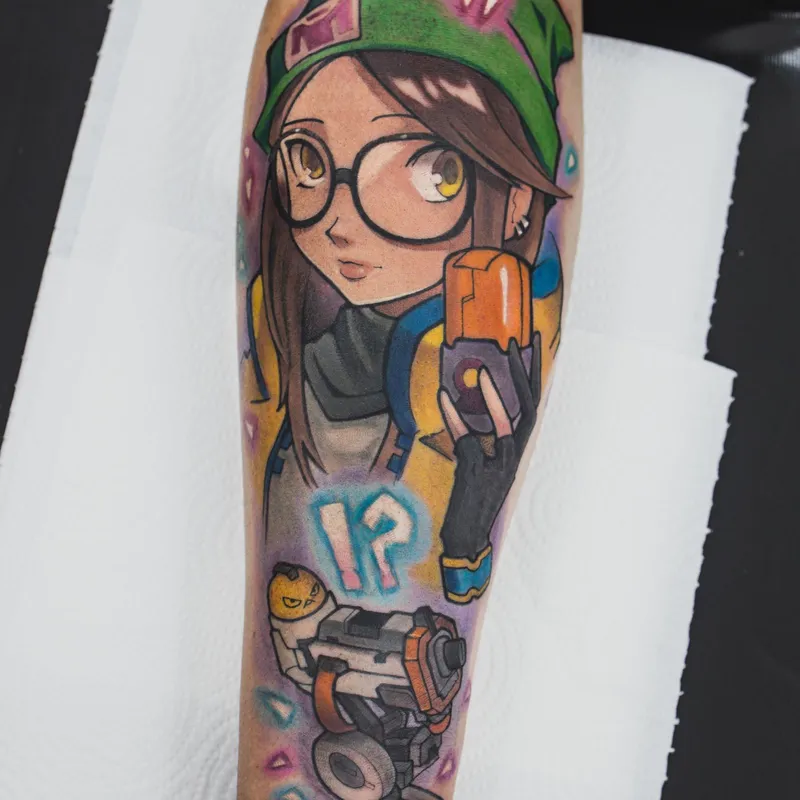
New school tattoos look like they jumped out of a cartoon, a video game or a graffiti wall. Big eyes, exaggerated proportions, thick outlines and bright, saturated colour give them energy and humour. It's a style for people who want their tattoo to be fun and loud. This guide explains where new school comes from, what defines it, how it compares to related styles, and what to look for in an artist.
Where new school comes from
New school took shape in the late 1980s and 1990s, when tattoo artists began mixing traditional tattooing with influences from cartoons, comics, graffiti and hip-hop culture. Brighter, more varied inks became available, and artists pushed colour, depth and distortion much further than traditional work allowed.
The style kept one key element from traditional tattooing: a strong, readable outline. Everything else got bigger, brighter and more playful.
What defines new school
- Exaggerated proportions: oversized heads, eyes and hands, squashed or stretched bodies
- Thick, bold outlines that hold the design together
- Saturated colour: bright, contrasting palettes with strong highlights
- Depth and shine: gradients and white highlights that make shapes look three-dimensional
- Humour and character: expressions, movement and attitude
A good new school piece reads instantly from across the room, even though it is packed with detail up close.
Popular subjects
- Characters and creatures: monsters, animals with attitude, original cartoon figures
- Caricatures and portraits in a cartoon style, including pets
- Food, objects and toys with faces and personality
- Graffiti-style lettering and bubble letters
- Fan art, inspired by games, anime and animation
On fan art: ask your artist to create an original design inspired by a character rather than copying official artwork. Many artists prefer to draw their own version, and it usually makes for a better tattoo.
New school versus related styles
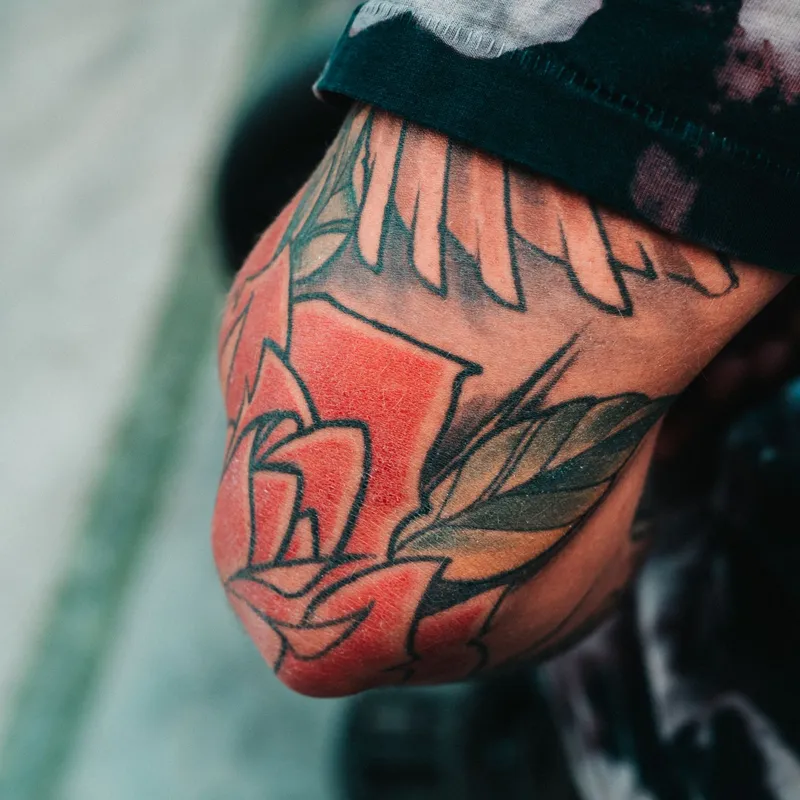
- Traditional: simple shapes, limited colour and minimal shading; see our traditional tattoo guide
- Neo-traditional: bold outlines with richer colour and ornament, but more natural proportions; see our neo-traditional tattoo guide
- New school: cartoon proportions, very bright colour, humour and exaggeration
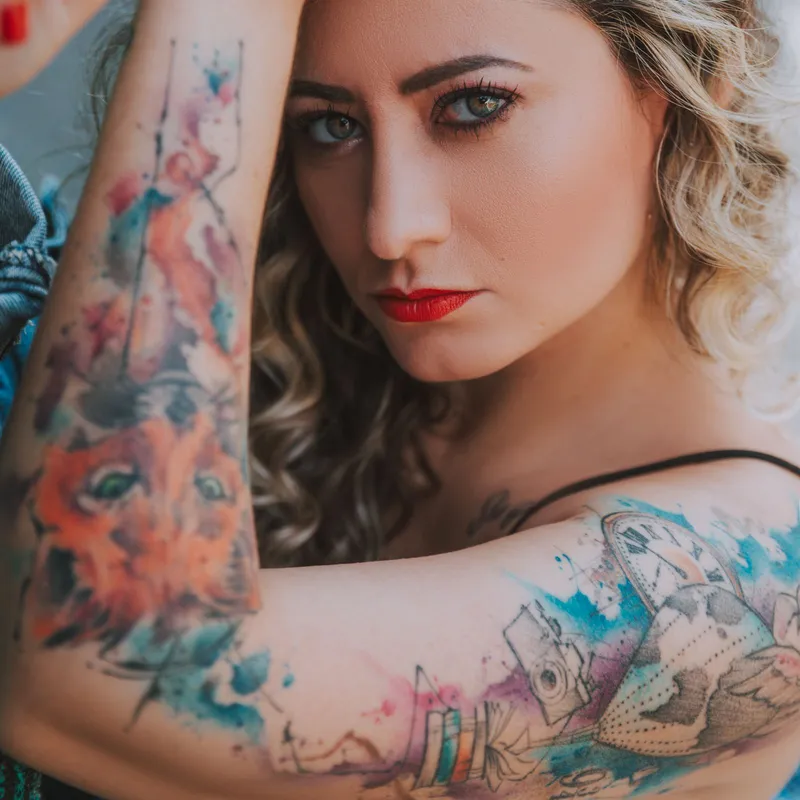
- Watercolour: soft, painterly colour without heavy outlines; see our watercolor tattoo guide
Placement and size
New school is detailed and colourful, so it needs room. Forearms, calves, upper arms, thighs and backs are popular. A small new school piece can work if the design is simple, but complex characters with many highlights look best larger.
The style also suits sleeves and leg sleeves, where several characters and objects are combined with backgrounds such as bubbles, splashes, clouds or graffiti shapes.
How new school ages
The thick outlines help a lot: they keep shapes readable as colours soften over the years. Bright colours such as yellow, light blue and pink tend to fade sooner than dark tones, especially with sun exposure. White highlights can also soften. A good artist plans contrast so the piece still reads when the brightest highlights have faded a little.
Protecting healed tattoos from strong sun is the most effective way to keep colours bright. During healing, follow your artist's aftercare instructions closely; colour work can look patchy for a while before it settles.
Planning a new school sleeve
A sleeve full of characters can quickly look chaotic. Good new school sleeves are planned like a scene: one or two main characters, smaller supporting elements and a background that ties everything together. Talk about the overall composition with your artist before the first session, even if you only get one piece at a time. Agree on a colour scheme, so pieces done months apart still feel like one project. And leave room for the background; it is what turns separate cartoons into a sleeve.
Is new school right for you?
New school is bold by design. It suits people who like humour, colour and big statements, and who are happy for their tattoo to be noticed. If you prefer subtle work, a smaller, simpler design or a different style may suit you better. A good way to decide is to collect images of new school pieces you love and look at them over a few weeks. If you still smile at them, that's a good sign.
Colour and skin tone
Bright colours look different on different skin tones. On darker skin, very light colours may show less, while strong mid-tones and dark outlines stay clear. An experienced new school artist will adjust the palette to your skin and show you healed examples on similar skin.
Choosing a new school artist
New school is a specialism that combines drawing skill with strong colour technique. When you look at portfolios, check:
- Clean, confident outlines
- Smooth, saturated colour without patchiness
- Original characters and designs, not only copies
- Highlights and depth that make the piece look three-dimensional
- Healed photos, to see how the colour holds up
Our tattoo shop directory lists studios by country and city, with the styles they work in. New school specialists are less common than traditional or fine line artists, so it can be worth travelling.
Booking
New school designs are almost always custom drawn. In your request, include:
- The character or subject, with the personality or expression you want
- References for the mood and colours, ideally from the artist's own work
- Placement, approximate size and nearby tattoos
- Whether the piece should be part of a larger project
A clear booking request with deposit helps the artist reserve drawing time.
For new school artists
Colour is what clients come for, and it is easily distorted by phone cameras. Photograph in daylight with correct white balance, show healed work and present your original characters clearly. With the OnlineTattoo.art tattoo website builder you get a portfolio sorted by style and a booking form that collects references and placement.
Photo: Matheus Bertelli / Pexels