Japanese tattoos: motifs, composition and planning a large piece
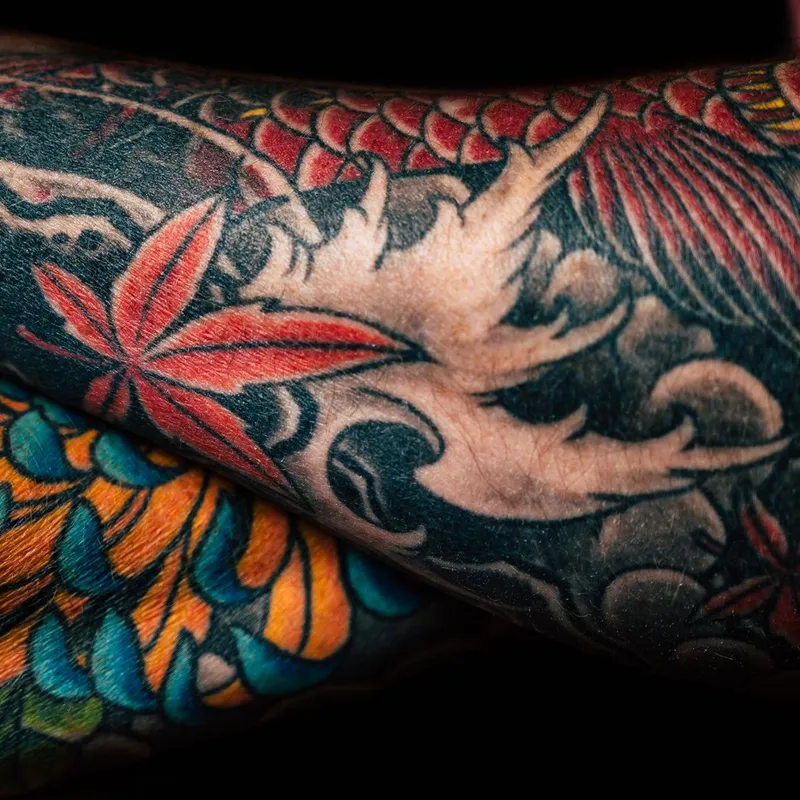
A Japanese tattoo, often linked to the tradition known as irezumi, is built around bold, flowing compositions: koi, dragons, tigers and flowers set against backgrounds of waves, wind and clouds. More than most styles, it's designed for large areas of the body, with the image following the shape of the arm, leg or back. This guide explains the visual language, why planning matters so much, and how to find an artist who works in this tradition.
What defines the Japanese style
Japanese tattooing has its own visual language, developed over a long history and connected to Japanese woodblock prints. Typical features:
- Strong, flowing composition that follows the body
- Bold outlines and solid shading, often in black with rich colour
- Main motifs set against a background that ties everything together
- Large scale: sleeves, back pieces, leg pieces and bodysuits
The background is not decoration; it is what makes the design one piece. Waves, wind bars, clouds and rocks connect the main images and lead the eye around the body.
Classic motifs
Japanese motifs often carry meaning, drawn from folklore, nature and history. Some of the best known:
- Koi: often associated with perseverance
- Dragons: powerful, protective figures
- Tigers: strength and courage
- Peonies, cherry blossoms and chrysanthemums: seasonal flowers with their own symbolism
- Snakes, phoenixes and foo dogs
- Masks and characters from folklore and theatre
Meanings can vary by source and context. A good artist in this style will explain the background of a motif and how motifs traditionally combine. If meaning matters to you, ask; it's part of the conversation.
Why the style suits large pieces
Japanese compositions are made to cover an area as one design. A single koi on its own can look fine, but the style comes into its own when the motif, flowers and background flow across a whole arm or back. That's why many clients plan a Japanese piece as a project rather than a single tattoo.
If you start small, discuss with your artist how the piece could later grow into a sleeve or a larger composition. Planning the direction early prevents awkward gaps or clashes later.
Planning a sleeve or back piece
- Start with the overall design: placement of the main motif, the background and where the piece ends
- Discuss the sequence: many artists do outlines first, then shading and colour over later sessions
- Expect several sessions, with healing time in between
- Agree on the price structure: per session, per hour or per project
- Plan around your life: holidays, sport, sun and work all affect healing
- Photograph progress so you and your artist can see how each part has healed
Large projects take time and commitment from both sides. A clear plan keeps them enjoyable.
Japanese versus traditional
Western traditional and Japanese tattooing both use bold lines and strong colour, and they've influenced each other. The difference is mainly in composition: traditional designs are usually self-contained images, while Japanese designs are often large, connected compositions with backgrounds. Our guide to traditional tattoos explains the Western side. Some artists also work in black and grey Japanese, which overlaps with blackwork.
Tebori and machine work
Traditional Japanese tattooing was done by hand, a technique called tebori. Some artists still work this way or combine it with a machine; most work with a machine. The technique matters less than the result and the artist's understanding of the style. If tebori interests you, ask the artist about it.
Respecting the tradition
Japanese tattooing has a long history with its own conventions about which motifs belong together, how seasons and symbols combine and how a composition should flow. Not every client needs to know all of that, but it helps to approach the style with curiosity. Ask your artist why they suggest a certain background or flower with your main motif. Be open to adjustments: a good artist may change the direction of a koi, the season of a flower or the placement of a dragon so the piece works as a whole. If you want a motif with personal meaning, explain it; the artist can often find a traditional way to express it. And if you combine Japanese elements with other styles, discuss whether the result still respects the style you're drawn to. That conversation is part of what makes a large Japanese piece personal.
Choosing an artist
Look for an artist who specialises in Japanese work and has completed large pieces. In their portfolio, check:
- Full sleeves or back pieces, not only small single motifs
- Backgrounds that flow and connect the elements
- Solid black and even colour
- Healed photos of large projects
Respect for the tradition shows in the details: how motifs are combined, how the background is handled and how the composition follows the body. Our tattoo shop directory lists studios by country and city with the styles they work in. Travelling for the right artist is common for large Japanese projects.
Booking
For large work, you'll usually start with a consultation. Prepare:
- The motifs you're drawn to and why
- The area you want to cover and any existing tattoos nearby
- Reference images, especially of complete compositions you like
- Your availability for several sessions
A complete booking request with reference images helps the artist judge the project before you meet.
For Japanese-style artists
Clients planning a large project want to see completed sleeves and back pieces, healed. Show them clearly, ideally as a series per project. With the OnlineTattoo.art tattoo website builder every artist has a portfolio sorted by style, next to a booking form that collects the details you need for a consultation.
Photo: Brett Sayles / Pexels