Biomechanical tattoos: machine parts under the skin
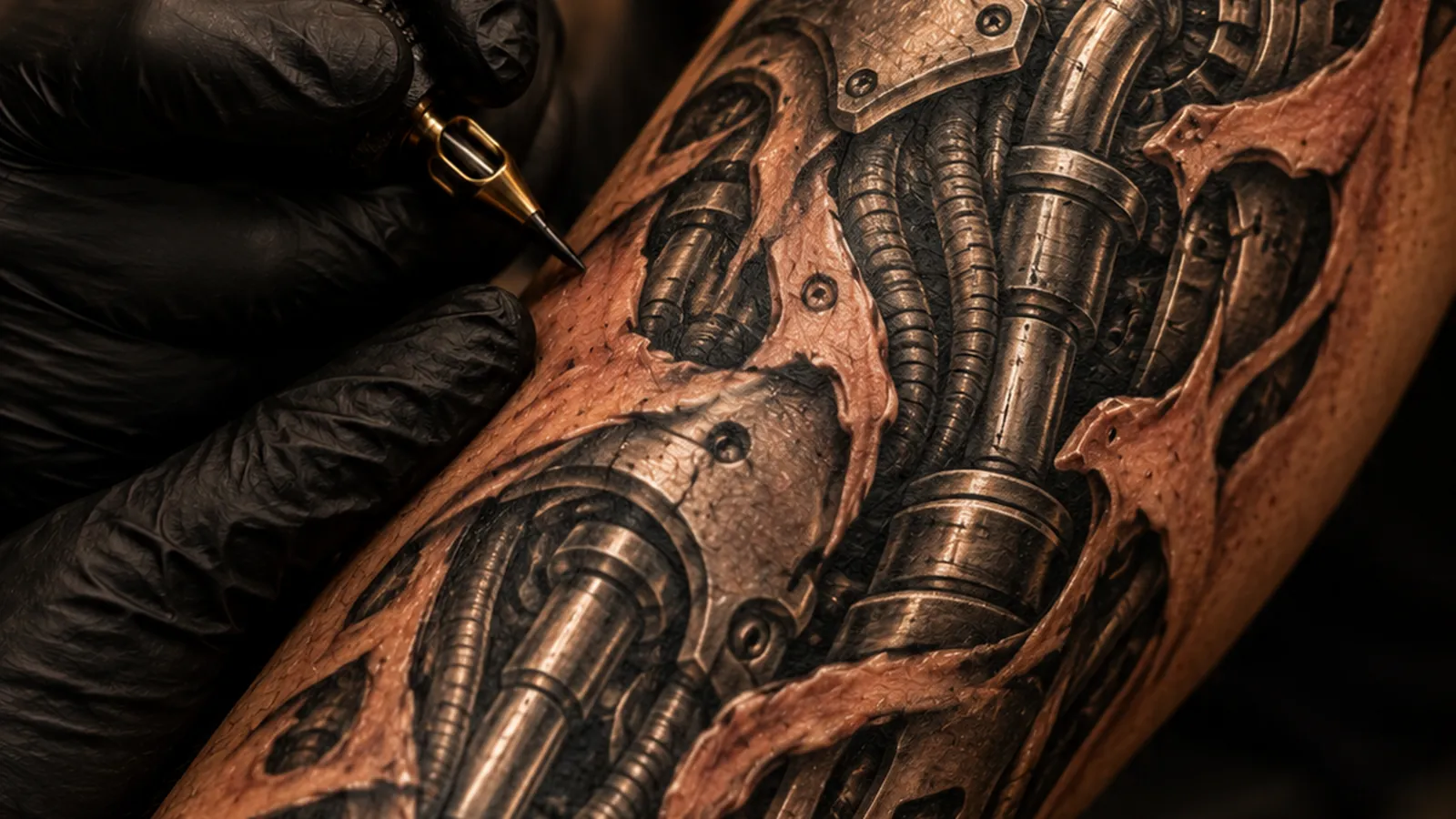
Biomechanical tattoos create the illusion that the skin has been opened to reveal machinery underneath: pistons, cables, gears and metal plates woven together with muscle and tendon. Done well, the result looks three-dimensional and follows the body as if it really belonged there. This guide explains where the style comes from, what makes it work, where it fits best and what to look for in an artist.
Where biomechanical tattoos come from
Biomechanical tattooing developed in the 1980s and 1990s, when a number of artists started combining realistic shading with mechanical and organic forms. The work of the Swiss artist H.R. Giger, known for his dark, surreal paintings that merge bodies and machines and for his designs for the film Alien, is commonly cited as an important influence on the look of the style. Science fiction, industrial design and anatomy drawings are other sources artists often mention.
Since then, biomechanical has split into several directions. Some artists stay close to the original metal-and-cable look, others lean towards organic shapes that resemble bone, coral or alien anatomy. What connects them is the idea that the tattoo shows what lies under the surface.
What defines the style
You can usually recognise biomechanical work by these elements:
- Torn-skin illusion: edges of skin that seem to peel back to reveal the inside
- Mechanical parts: pistons, cylinders, bolts, cables, hoses and plates
- Organic forms: muscles, tendons and bone-like structures that blend with the machinery
- Strong depth: dark shadows behind objects and bright highlights on metal, so parts appear to sit at different levels
- Flow with the body: the composition follows the direction of muscles and joints
Most biomechanical pieces are done in black and grey, sometimes with accents of colour such as metallic blues, greens or reds. Some artists work entirely in colour.
How the style uses the body
Biomechanical tattoos are rarely drawn as flat designs and copied onto the skin. Many artists sketch directly on the body with skin markers or adapt a design closely to the client’s anatomy. A piston that follows the forearm, or cables that run along the calf, make the illusion much more convincing than a design that ignores the shape underneath.
That is also why the style suits larger areas. Forearms, upper arms, full sleeves, calves, thighs and backs give the artist enough room to build depth and connect elements. Small biomechanical pieces exist, but they lose a lot of the three-dimensional effect.
Biomechanical and related styles
- Realism: shares the shading techniques and the aim of a believable image, as described in our realism tattoo guide
- Black and grey: most biomechanical work is built from the same grey washes and contrast; our black and grey tattoo guide explains the technique
- Blackwork: sometimes used for bold, graphic versions with large solid black areas, see our blackwork tattoo guide
- Bio-organic: a related direction with fewer machine parts and more shapes that resemble bone, plants or coral
How biomechanical tattoos age
Like other realistic styles, biomechanical relies on contrast. Deep blacks and strong highlights hold the illusion together. Over the years, ink spreads slightly and soft grey transitions can blur, so very fine details tend to fade first. Artists who build the design with enough contrast and leave clear dark and light areas usually make work that stays readable longer.
Sun is the biggest risk for any tattoo with soft shading. Covering or protecting the area in strong sun helps keep the grey tones distinct. A touch-up can restore highlights or deepen shadows after many years, if needed.
Planning a larger piece
Because biomechanical often grows into sleeves and back pieces, it pays to plan ahead:
- Decide early whether the tattoo should stay a single piece or become part of a sleeve
- Discuss how the edges will connect to existing tattoos or to future work
- Expect several sessions for larger work; each session usually builds up depth layer by layer
- Ask how the artist handles healing time between sessions
A clear plan keeps the composition coherent, even if it is tattooed over months or years.
Choosing an artist
Biomechanical is technically demanding. In a portfolio, look for:
- Convincing depth: parts should clearly sit in front of or behind each other
- Clean metal textures with controlled highlights
- Designs that follow the anatomy instead of sitting flat on top of it
- Healed photos, so you can judge how the contrast holds up
Many artists who do biomechanical also work in realism or black and grey. Our tattoo shop directory lists studios by country and city, with the styles they work in, which makes it easier to compare artists near you.
Booking a biomechanical tattoo
Biomechanical designs are almost always custom. A useful request includes:
- The area you want covered and roughly how large the piece should be
- Whether you prefer a mechanical, organic or mixed look
- Black and grey or colour accents
- Photos of the area, including existing tattoos nearby
Artists often ask for a deposit before planning a large custom piece. A clear booking request with deposit helps both sides agree on the plan before the first session.
For biomechanical artists
Clients choose biomechanical artists on depth and flow, which are hard to judge from a single close-up. Show full limbs, different angles and healed work, and group your portfolio by style so that biomechanical pieces are easy to find. With the OnlineTattoo.art tattoo website builder you get a portfolio sorted by style and a booking form that asks for placement, size and reference photos.