Patchwork tattoos: a sleeve built from small pieces
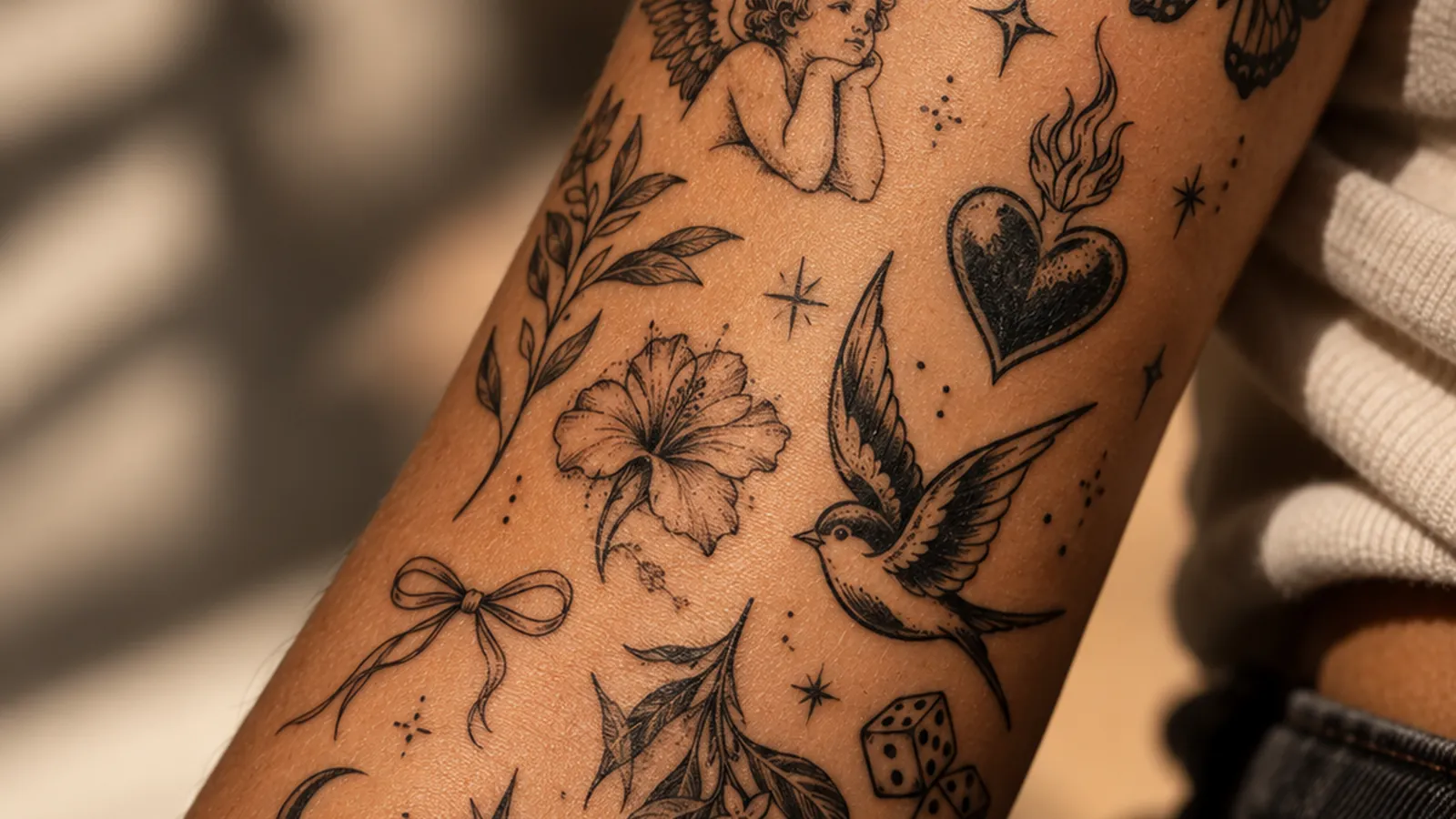
A patchwork tattoo is not one design but many: small, separate tattoos placed close together until they cover an arm, a leg or another area. Instead of a single composition with background filler, each piece stands on its own, with bare skin in between. This guide explains what defines the look, how to plan a patchwork sleeve, how the pieces age and how to choose the artists who add to it.
What a patchwork tattoo is
The name comes from patchwork quilts and from jackets covered in sewn-on patches. A patchwork sleeve works the same way: individual tattoos, often of similar size, are arranged next to each other with small gaps of skin. There is no background shading or connecting filler that turns them into one image.
The style grew naturally from the way many people collect tattoos: one at a time, from different artists and at different moments. What makes it a deliberate style is the planning. Pieces are chosen and placed so the collection looks balanced, even though every tattoo is its own small design.
What defines the style
- Separate pieces: every tattoo has its own outline and can be read on its own
- Visible skin between pieces: gaps of bare skin give the arrangement its rhythm
- Similar scale: most pieces are roughly the same size, which keeps the whole calm
- Small fillers: stars, dots, sparkles or tiny symbols fill awkward gaps without connecting the main pieces
- A loose theme or a mix: some sleeves stick to one theme, others mix motifs freely
Patchwork can be done in any technique. Many people use traditional tattoos with bold outlines, which read clearly next to each other. Others prefer fine line work for a lighter, more delicate collection, or keep each piece small and simple in a minimalist style.
Popular motifs
Because each piece is small, simple subjects with a clear silhouette work best:
- Flowers, leaves and small branches
- Animals and insects such as swallows, butterflies, moths, snakes and cats
- Celestial symbols: suns, moons and stars
- Classic flash such as hearts, daggers, anchors, roses and eyes
- Personal objects, initials or small symbols with a meaning to you
Mixing motifs is part of the charm, but a few shared elements, such as the same line weight or a limited colour palette, help the sleeve hold together.
Planning a patchwork sleeve
You do not need to design the full sleeve upfront, but a little planning helps:
- Start in a visible spot: many people place the first pieces on the outer forearm or upper arm and work outwards
- Keep the size consistent: a very large piece among small ones breaks the patchwork rhythm
- Leave enough space: about a finger’s width between pieces keeps them readable as the skin ages
- Use fillers last: small stars or dots work best once the main pieces are in place
- Decide on black or colour: an all-black patchwork looks very different from a colourful one
Tell each artist that the tattoo is part of a patchwork. A good artist will suggest a size and angle that fits with what is already there.
Placement on the arm also affects how pieces look. Tattoos on the inner arm stretch and twist more when you move, while the outer forearm stays relatively flat. Angling pieces slightly so they follow the shape of the arm usually looks more natural than lining them up in straight rows.
Mixing artists and styles
One appeal of patchwork is that it can hold work from many artists, for example from travels or guest spots. That freedom works best when line weight and contrast are similar. A very fine, pale tattoo next to heavy traditional outlines can look unfinished. Show photos of your existing pieces at every booking so the new artist can match them.
How patchwork tattoos age
The gaps between pieces matter more than people expect. Ink spreads slightly in the skin over the years, and tattoos placed too close together can blur into each other. Bold outlines and clear shapes stay readable longer than very fine details, especially on the outer arm where the sun hits most.
Each piece heals separately, so follow the aftercare advice from each artist. Our tattoo aftercare guide covers what usually happens during healing.
Choosing an artist
For a patchwork sleeve you may work with one artist or with several. In each portfolio, look for:
- Small pieces with clean outlines that stay readable at palm size or smaller
- Experience with adding tattoos between existing work
- Healed photos of small tattoos, to judge how they hold up
Our tattoo shop directory lists studios by country and city, with the styles they work in, so you can find artists for the next piece wherever you are.
Booking the next piece
Small patchwork tattoos are often booked from flash or as short sessions. A useful request includes:
- The motif and the approximate size
- Where on the sleeve it should go, with a photo of the area
- Whether it should match existing pieces in line weight or colour
Many artists ask for a deposit, even for small work. A clear booking request with deposit makes it easy to agree on time and size.
For artists offering patchwork pieces
Patchwork collectors often look for flash they can book quickly. Show available designs, mark which are still free and present small healed pieces clearly. With the OnlineTattoo.art tattoo website builder you can publish flash, sort your portfolio by style and receive booking requests with size and placement.