Surrealism tattoos: dreamlike images on skin
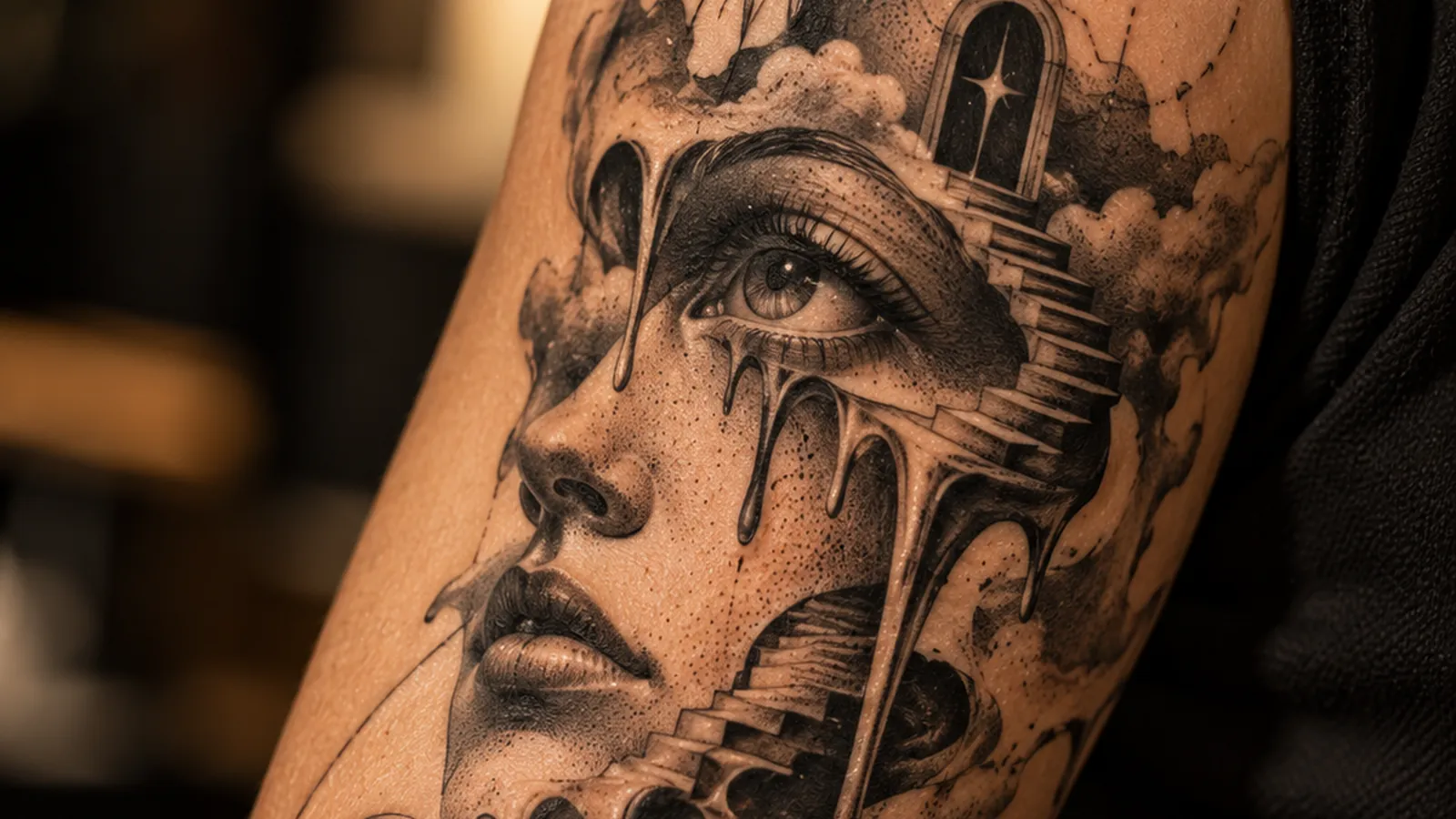
Surrealism tattoos show things that cannot exist: a face that melts into water, a staircase that grows out of a head, a moon hanging inside a doorway. The images are often drawn realistically, which makes the impossible feel strangely believable. This guide explains where the style comes from, which motifs and techniques are typical, where it works best and how to find an artist who can pull it off.
Where surrealism comes from
Surrealism started as an art and literary movement in Europe in the 1920s. Writers and painters such as André Breton, Salvador Dalí, René Magritte and Max Ernst explored dreams, the unconscious and unexpected combinations of ordinary things. Dalí’s melting clocks and Magritte’s bowler-hatted men with hidden faces are among the best-known images of the movement.
Tattoo artists borrow that approach. A surrealist tattoo does not have to copy a famous painting; it uses the same idea of combining realistic elements in an impossible way. The style is not one fixed technique, but a way of composing an image.
What defines the style
Surrealism tattoos often share these features:
- Impossible combinations: a face that opens like a door, a hand that turns into branches, a landscape inside an eye
- Realistic rendering: objects are shaded to look solid and believable, so the strangeness stands out
- Melting and dissolving forms: shapes that drip, crack, fold or fade into smoke or water
- Symbolic objects: clocks, keys, stairs, doors, moons, eyes and hourglasses
- Strong composition: one central idea, carefully arranged so the eye reads it in the right order
Most surrealism tattoos are done in black and grey, which suits the dreamlike mood, but colour versions exist as well.
Common motifs
- Faces that split, melt or reveal something inside
- Doors, windows and stairs leading nowhere or into the sky
- Planets, moons and suns in unexpected places
- Clocks and hourglasses, often bending or melting
- Animals combined with objects or landscapes
- Reflections in water that show a different image
The meaning is often personal: a tattoo about memory, change or time can be expressed in a surreal image rather than a literal one.
Turning an idea into a design
Many surreal tattoos start with a feeling rather than a picture. A good artist helps translate that into one clear visual idea. Some questions that often come up in a consultation:
- What is the main image? One strong central element, such as a face or a hand, gives the design an anchor
- What changes or breaks? The surreal twist, such as melting, opening or transforming, should be easy to see
- What supports it? Secondary objects should add to the idea without crowding it
- How does it read on the body? The artist will think about which part should sit where the eye lands first
Bringing a few words that describe what the tattoo means to you is often more useful than a long list of objects. It leaves the artist room to find an image that fits both the idea and your body.
Surrealism and related styles
- Realism: provides the shading techniques that make surreal images convincing; see our realism tattoo guide
- Black and grey: most surreal work relies on the same soft grey tones and contrast, explained in our black and grey tattoo guide
- Trash polka: also mixes realistic images with unexpected elements, but with a raw collage look and red accents, as described in our trash polka tattoo guide
- Illustrative: can produce surreal ideas with a more drawn look; our illustrative tattoo guide covers it
Placement and size
Because surreal tattoos combine several elements and rely on realistic shading, they need space. Very small pieces lose the details that make the idea work. Forearms, upper arms, calves, thighs and the back are common choices. A long, narrow area such as the forearm suits compositions that read from top to bottom, for example a face that dissolves into water below.
Think about how the design will look from a normal viewing distance. The central idea should be clear at a glance, with the details rewarding a closer look.
How surrealism tattoos age
Realistic shading and soft transitions blur slightly over time, so contrast is important. Designs with clear dark and light areas stay readable longer than those built only from mid-grey tones. Very fine details, such as tiny stars or thin cracks, fade first.
Good aftercare in the first weeks and sun protection afterwards help any shaded tattoo keep its depth. Our tattoo aftercare guide covers the healing basics.
Choosing an artist
Surrealism asks for both technical skill and design thinking. In a portfolio, look for:
- Smooth, realistic shading with convincing depth
- Original compositions, not only copies of existing artworks
- Clear focal points in busy designs
- Healed photos, so you can judge how the contrast holds up
Our tattoo shop directory lists studios by country and city, with the styles they work in, so you can compare artists near you.
Booking a surrealism tattoo
Surreal designs are almost always custom. A useful request includes:
- The idea or feeling you want to express, not only the objects
- Two or three reference images of surreal work you like
- Black and grey or colour
- Placement, approximate size and photos of the area
Many artists ask for a deposit before designing a custom piece. A clear booking request with deposit helps both sides agree on the concept before the session.
For surrealism artists
Clients choose surreal artists on ideas as much as technique, so show your original designs alongside healed work, and explain the concept behind a piece where it helps. With the OnlineTattoo.art tattoo website builder you get a portfolio sorted by style and a booking form that asks for the idea, placement and references.